Mini-Z Spring Rate Reference Chart: Front and Rear by Chassis and Surface
Mini-Z spring rate reference for MR-03, MR-04, MA-020: front and rear picks by chassis and surface, plus a diagnosis guide for handling problems.
MR-03 · MR-04 · MA-020
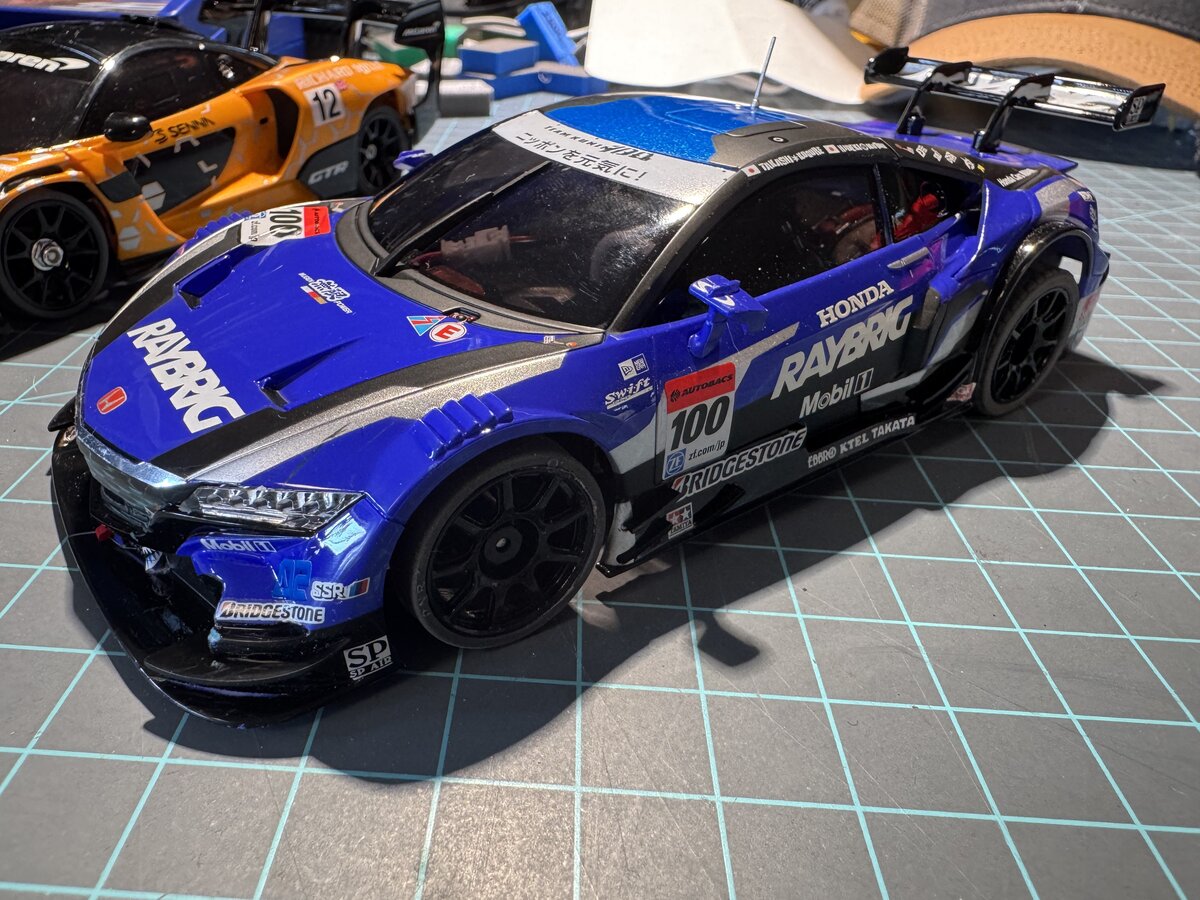
The Mini-Z spring color system is a great idea that somehow ends up confusing almost everyone. Kyosho uses color codes, PN Racing uses color codes, Yeah Racing uses color codes, and none of them match each other. You end up at the track with a pile of springs and no idea whether your PN “medium” is the same rate as your Kyosho “medium.” It is not.
This guide cuts through that by giving you reference baselines in the only terms that matter at the track: which end of the car to start with, which direction to go from the baseline, and why. The chassis-by-chassis and surface-by-surface breakdown below is what you build your own setup log from, not what you copy and race without adjustment.
If you want to understand the diagnosis layer (what the car tells you when springs are wrong and how to read it) the spring rate tuning by symptom guide covers that in full. This guide is the reference. That one is the mechanic.
How Mini-Z Springs Work (The Short Version)
Spring rate controls how much load transfers to each tire when the car accelerates, brakes, or corners. A stiffer spring transfers load faster and limits the chassis from flexing. A softer spring lets the chassis move more, which keeps tires in contact with the track through bumps but slows initial response.
The critical point that trips people up on Mini-Z: RWD rear suspension is primarily controlled by T-plate, not rear springs. On the MR-03 and MR-04, the T-plate handles rear flex behavior. Springs on these platforms are primarily a front-end tuning variable. The MA-020 AWD is different: it has both front and rear springs as active tuning variables.
This means if you are fighting rear exit behavior on an MR-03, changing rear springs will do less than swapping T-plate stiffness. Spring changes on MR-03/04 rear are a fine-tuning tool after T-plate is sorted. See the T-plate setup guide if you have not set your T-plate baseline yet.
MR-03 Spring Reference Chart
The MR-03 EVO is the most tuned platform on this site. Spring changes on MR-03 are front-focused. The rear is covered by T-plate. The chart below reflects this.
| Surface | Front Spring | T-Plate Flex | Notes |
|---|---|---|---|
| RCP (high grip) | Medium | Medium carbon | Standard club racing baseline. Start here before any adjustments. |
| RCP (fresh, very high grip) | Medium-stiff | Medium-soft | Fresh RCP can cause traction roll with too-soft front. Go stiffer if car tips. |
| Carpet (mid-grip) | Medium-soft | Medium | More compliance than RCP. Entry push is the common complaint. |
| Carpet (worn, low grip) | Soft | Soft-medium | Low-bite carpet rewards compliance everywhere. |
| Asphalt (outdoor) | Soft | Soft | Surface variation outside needs the most compliance. |
| Drift | Stiff | Stiff | Stiff everything for chassis rigidity through slides. |
Beginner default: Medium front spring, medium T-plate. This covers 80 percent of indoor running conditions and is where any new setup should start.
Experienced driver adjustment: Most fast MR-03 drivers on RCP end up one step stiffer on front than the beginner default after they have dialed in their tire choice and T-plate. The stiffer front reduces corner-entry rotation just enough to make the car predictable at race pace. Beginners find a stiff front understeery because they are not carrying enough corner speed to load it properly.
What to Buy: MR-03 Springs
The Kyosho OEM spring set covers the full rate range for MR-03. If you want a wider rate spread and color-coding that makes pitting faster, the PN Racing set is the aftermarket standard at most clubs.
Kyosho Mini-Z Spring Set (Multi-Rate, MR-03/MA-020) on Amazon
Kyosho Front Spring Set (MR-03) on Amazon
MR-04 Spring Reference Chart
The MR-04 is narrower than the MR-03 and more reactive to spring changes as a result. The narrower track means weight transfer happens faster and the car is more sensitive at both ends. One important note: not all MR-03 springs fit the MR-04, and the MR-04 EVO2 has its own spring set (MZW701). Confirm compatibility before ordering.
| Surface | Front Spring | T-Plate Flex | Notes |
|---|---|---|---|
| RCP (high grip) | Medium | Medium | Same baseline as MR-03 to start. The narrower track will make adjustments feel more pronounced. |
| RCP (fresh) | Medium | Medium-stiff | MR-04 is more prone to traction roll than MR-03 due to narrow track. T-plate stiffness helps more than front spring here. |
| Carpet (mid-grip) | Medium-soft | Medium-soft | MR-04 on carpet benefits from softer T-plate more than front spring change. |
| Asphalt | Soft | Soft | Same logic as MR-03. Softer everything outdoors. |
| Drift | Stiff | Stiff | MR-04 drift setup requires stiffer settings to prevent the narrow chassis from flopping sideways. |
Key difference from MR-03: The MR-04 is more sensitive to T-plate changes than to front spring changes. If you are chasing balance on MR-04, move the T-plate first, front spring second. That is the reverse of the natural instinct (which is to change springs first because they are more familiar).
MA-020 Spring Reference Chart
The MA-020 AWD platform is the most complex spring setup on this list because both front and rear springs are active variables. All-wheel drive means load transfer is split between all four wheels, which changes how springs behave compared to RWD.
The key MA-020 insight: front springs control rotation; rear springs control traction compliance. On RWD, you tune front springs for entry and T-plate for exit. On AWD, front springs still handle entry, but the rear spring adds a traction management variable that does not exist on RWD platforms. Softer rear on AWD increases rear compliance and smooths out throttle bumps. Stiffer rear reduces rear squat and firms up mid-corner stability.
| Surface | Front Spring | Rear Spring | Notes |
|---|---|---|---|
| RCP (high grip) | Medium | Medium-soft | Softer rear than front is typical on AWD. Prevents rear from being too rigid through high-grip corners. |
| RCP (fresh, very high grip) | Medium-stiff | Medium | Stiffen both one step on very high grip to prevent traction roll. |
| Carpet (mid-grip) | Soft-medium | Soft-medium | Balance matched. Carpet grip is lower and more even front-to-rear. |
| Carpet (worn) | Soft | Soft | Low bite everywhere means max compliance. |
| Asphalt | Soft | Soft | Outdoor surface variation needs compliance at both ends on AWD. |
MA-020 spring interaction with gyro: MA-020 drivers often run lower gyro gain than equivalent RWD setups because AWD drivetrain provides its own stability. When adjusting springs on AWD, check whether the gyro gain needs to come down as well after stiffening. A stiff spring setup plus high gyro gain on AWD creates an overcontrolled car that fights itself mid-corner.
What to Buy: MA-020 Springs
The Kyosho OEM spring set works for both MR-03 and MA-020 front springs. MA-020 rear springs are a separate part.
Kyosho Mini-Z Spring Set (Multi-Rate, MR-03/MA-020) on Amazon
Spring Rate Tuning Quick Reference: Symptoms and Fixes
Use this after you have set your baseline from the charts above. If the car does not behave as expected, match the symptom to the fix.
| Symptom | When | Most Likely Cause | First Fix |
|---|---|---|---|
| Pushes on corner entry | Braking into corner | Front spring too stiff | Soften front one step |
| Rear snaps out on entry | Before you have turned in | Front spring too soft, nose dive unloads rear | Stiffen front one step |
| Rear snaps out on exit | As you roll power on | T-plate too soft (RWD); rear spring too soft (AWD) | Stiffen T-plate (RWD) or rear spring (AWD) |
| Mid-corner understeer | Steady-state through apex | Rear spring too soft, chassis rolling and unloading front | Stiffen rear (AWD) or T-plate (RWD) |
| Car feels bouncy / skips | Any phase | Springs too stiff for surface variation | Soften front by one step; re-evaluate T-plate |
| Car feels numb and slow to respond | Any phase | Springs too soft overall | Stiffen front one step first |
| Car is fast for 3 laps then falls off | End of a long stint | Tire wear more likely than springs | Check tire condition first |
One-Change Rule
Every piece of spring advice comes with the same caveat: change one variable at a time. Change front spring, drive five laps, note the result. Then change T-plate, drive five laps. Mixing spring, T-plate, and compound changes in the same session produces results you cannot explain or reproduce.
The fast drivers at club nights do not have exotic setups. They have known setups they can reproduce. That consistency comes from logging what they changed and what happened. A setup sheet you wrote yourself beats a borrowed one every time because it is specific to your track, your tires, and your driving style.
For the symptom diagnosis method in full, the spring rate tuning by symptom guide covers the diagnosis layer. For how spring setup interacts with tire compound selection, the tire compound by surface guide has the axle-isolation tuning process. For how springs, T-plate, droop, and camber all fit together as a system, the droop and camber setup guide is the foundational reference to work through before chasing spring rate fine-tuning.
Related Guides
- Shop Suspension Parts: springs, T-plates, and sway bars in one place
- Spring Rate Tuning by Symptom: diagnose the car before you change anything
- T-Plate Setup Guide: the primary rear-end tuning variable on MR-03 and MR-04
- Droop and Camber Setup: the variables that spring rate cannot fix
- Tire Compound by Surface: how compound interacts with spring rate decisions
- Mini-Z Setup Sheet by Surface: full surface baseline chart including diff oil and gyro
- MR-03 Platform Guide: full RWD upgrade context including suspension
- MA-020 Platform Guide: AWD platform-specific setup notes
Reddit thread angle: “I made a Mini-Z spring rate chart organized by chassis and surface because I keep second-guessing which direction to go at the track. Here is what actually worked for me and why I ended up there.” Post for r/miniz, invite the community to share where their own baselines differ from the reference and why.
Prices are approximate and change often. Check the listing for current pricing.
The Kyosho-branded carbon T-plate I run on the MR-03. Consistent flex, durable, fits the stock geometry without drama.
Shop →Medium flex carbon T-plate for MR-03 MM chassis. The most-run option for general RCP use.
Shop →0.75mm graphite plate. Fits MR-03 and MR-04 MM chassis. Consistent flex, lighter than carbon.
Shop →OEM spring set plus front and rear sway bars. Covers most balance adjustments.
Shop →OEM front spring assortment for the MR-03 EVO chassis. The reference set to tune from before going aftermarket.
Shop →