Best First Mini-Z Upgrades: 5 Mods That Matter
New Mini-Z owner? Start with these 5 upgrades. Ranked by impact per dollar. The first mod transforms how your car drives for under $15.
MR-03 · MR-04 · MA-020 · MX-01
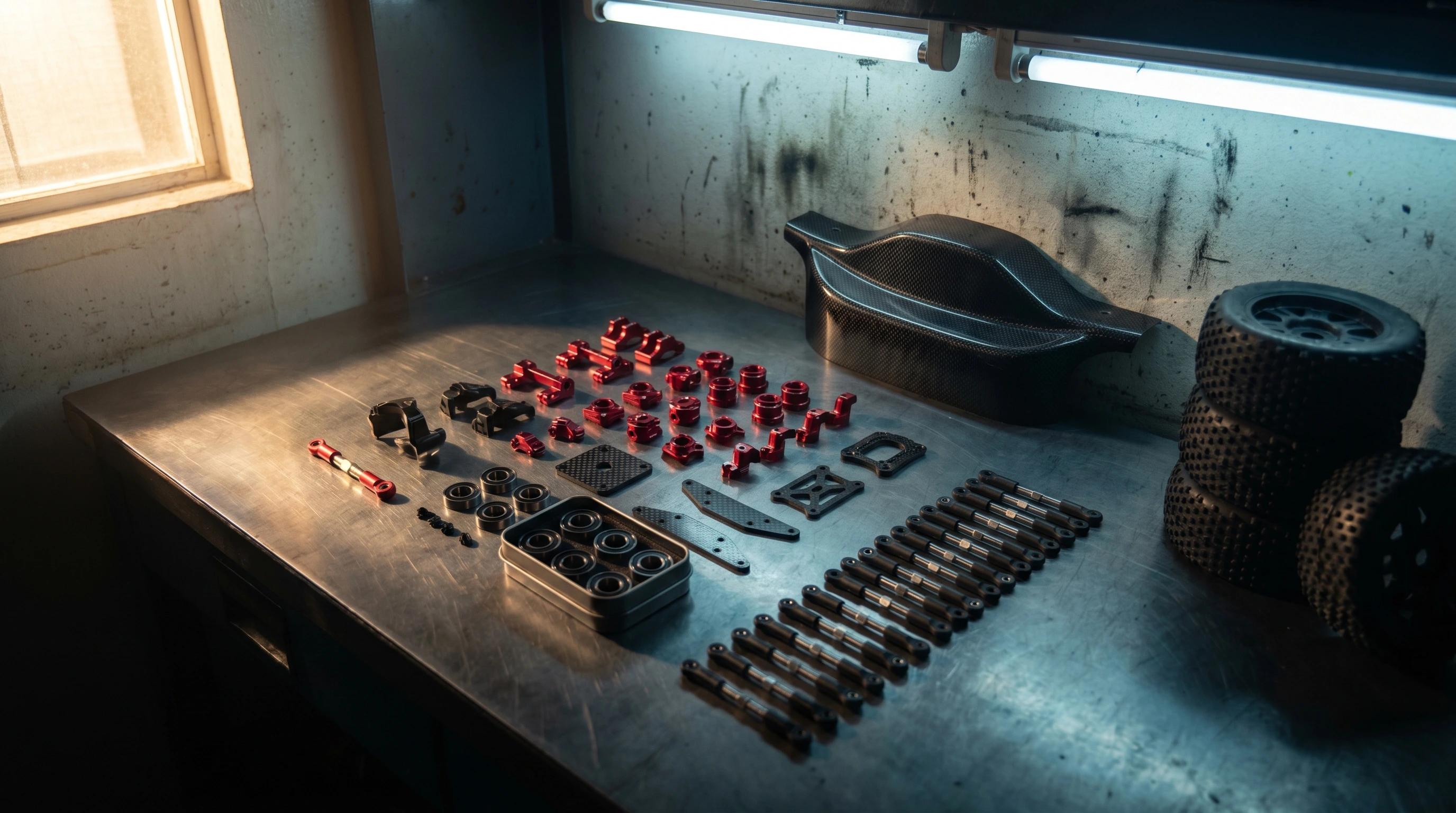
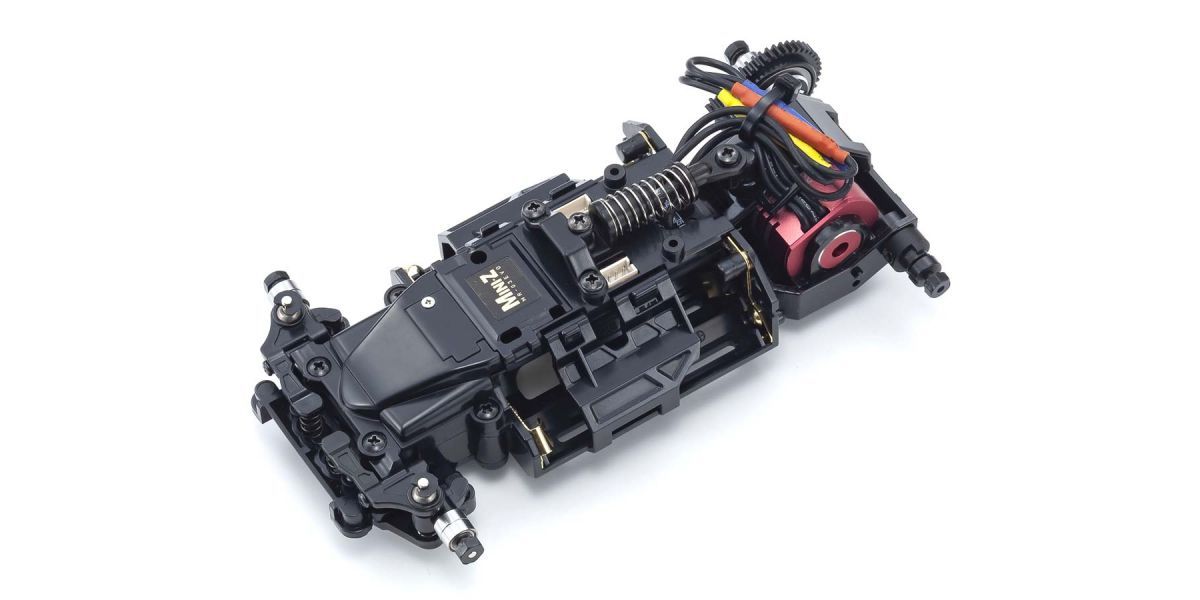
Every Mini-Z owner ends up at the same place eventually. The stock car is genuinely fun (that’s not the issue) but you start to notice things. The steering feels a little loose. The car doesn’t hold a line the way it should. You wonder if it’s you, or the car.
It is mostly the car. The fix is five specific parts, in this order.
Here are the first five mods, ranked by how much they’ll change your driving experience per dollar spent.
If you have not actually bought the car yet, start one step earlier: How to Buy Your First Mini-Z covers ReadySet versus Sports versus a bare chassis set, which platform matches the kind of driving you want to do, and the cells, charger, and tools the box does not include.
1. Ball Bearings (Do This First)
The single most impactful upgrade you can make to any Mini-Z is replacing the plastic bushings with ball bearings. Stock Mini-Zs use injection-molded plastic bushings at the wheels and drivetrain. They create rolling resistance, they wear quickly, and they introduce slop.
Ball bearings eliminate most of that. You’ll feel it immediately. The car rolls freer, spins up faster, and holds speed through corners. This is the one mod that belongs on every single Mini-Z before anything else.
What to buy: A full bearing set (typically 8-10 bearings depending on platform). For the MR-03 and MA-020, look for 850 and 1050 size bearings. PN Racing and Atomic both make reliable options.
→ Mini-Z Full Bearing Set on Amazon
Once you’re beyond the basic bushing swap and wondering whether ceramic bearings are worth the price, the Bearing Upgrades: Ceramic vs Steel guide breaks down exactly which positions justify the upgrade cost. Browse the full lineup on the Shop Bearings page.
2. Tire Compound
Stock tires are fine for carpet, but they’re a compromise. Once you know what surface you’re primarily running on, matching your compound makes a real difference in grip and consistency.
For RCP track (the foam tile most indoor tracks use), you want a softer compound. For smooth carpet, medium works well. For hardwood or linoleum, you’ll want something harder with more lateral bite.
What to buy: Start with a mid-range compound from Kyosho or PN Racing. You don’t need to go deep on this yet. Just get off the stock tires. When you’re ready to dial in compound by surface, the Tire Compound Guide breaks down the full tuning system. Whatever compound you land on, truing and gluing the tires is what makes them run round and consistent instead of vibrating or wearing unevenly.
→ Kyosho Mini-Z Racing Radial Tire 30° on Amazon
3. T-Plate Upgrade
The T-plate is the main chassis flex point on rear-wheel-drive Mini-Z platforms. It controls rear traction under acceleration and how the car settles through corners. Stock T-plates are plastic with limited tuning options.
Upgrading to a carbon fiber or aluminum T-plate gives you more consistent behavior and opens up the tuning range. Stiffer plates work better on high-grip surfaces; softer plates help on low-grip or bumpy surfaces. The T-Plate Setup guide covers how to read the car and choose the right flex.
What to buy: Carbon T-plates from PN Racing or Yeah Racing. Start with a medium flex rating.
→ Mini-Z Carbon T-Plate on Amazon
Once the T-plate is sorted, front spring rate and droop are the next mechanical variables. The droop and camber setup guide covers how to set both from scratch and what the car is telling you when they’re off.
4. Motor Pinion / Gear Ratio
This one is cheap and often overlooked. The stock gear ratio might not be optimized for your track or driving style. Changing the pinion gear changes your final drive ratio. More teeth means faster top speed, fewer teeth means more torque and acceleration.
Most indoor tracks favor a slightly taller gear (more teeth) because the straightaways are short and you want to be pulling hard out of corners. Experiment with 1-2 teeth in each direction from stock.
What to buy: A pinion gear set (multiple tooth counts). They’re cheap, under $5 each.
→ Mini-Z Pinion Gear Set on Amazon
For exact gear ratios by pinion tooth count for the MR-03 and MR-04, see the Mini-Z Pinion Gear Ratio Reference, which covers the 6T through 9T RWD pinions with surface and motor-type context, and what changes on the AWD cars, so you know which direction to go. Once the new pinion is in, mesh has to be set correctly, too tight or too loose both cost power and strip the spur gear. The Mini-Z Gear Mesh guide covers how to set it by ear.
Changing the pinion is the cheap first step. The motor itself is the bigger lever once gearing is dialed in. When you’re ready to step up from the stock can, the Brushed Motor Guide decodes turn counts and tells you which motor to buy for your track and class.
5. Gyro
If you’re running the MR-03 or another rear-wheel-drive platform and struggling with snap oversteer, a gyro is transformative. It corrects rear-end slides by feeding counter-steer faster than any human can react.
This isn’t cheating. It’s electronics doing what physics demands. At 1/28 scale, RWD cars can behave very twitchy. A gyro makes the car actually drivable at speed.
What to buy: Atomic, Reflex Racing, or Sanwa options are all solid. Make sure it’s compatible with your ESC/receiver setup. The Gyro Setup guide covers installation, direction setting, and dialing in gain.
Running an MX-01? Skip this step entirely. Gyros are for managing RWD snap oversteer at speed. That’s not a crawler problem. Your fifth upgrade slot belongs to the suspension and traction mods covered in the MX-01 Mod Path guide. The sequenced build plan there shows you exactly which $30-50 stages to hit in order.
→ DasMikro Mini-Z Gyro on Amazon
Those five mods, bearings, tires, T-plate, gearing, gyro, will take you from a stock Mini-Z to something that genuinely rewards good driving. Each one builds on the last. Do them in order and you’ll feel each improvement clearly. Once you’ve worked through all five, the intermediate guides are the next tier: still approachable, but they assume you’re past the basics covered here. Once these are dialed in and you start comparing notes at club night, the How to Read a Setup Sheet guide explains every field you’ll see passed around: T-plate flex, diff preload, spring rates, camber clicks. That way you can use a borrowed baseline intelligently instead of copying it blindly. One upgrade that belongs in the queue right after these five: if you’re staying brushed, do the MOSFET swap before you tune anything else on the electronics side. Lower-resistance FETs unlock better throttle response for about $15 and 20 minutes of soldering. Just remember, parts only matter once your driving catches up. Read The $50 Mini-Z That Beat My $300 Build if you need a reminder.
If you’re still deciding whether Mini-Z is worth getting into, here’s why it’s the best entry point to RC racing. And for a honest look back at the upgrade mistakes most of us make, see What I’d Do Differently Starting Over.
Once these are done, the MR-03 Platform Guide covers the full competitive build path for RWD, and the MA-020 Platform Guide does the same for AWD. If you want a focused shopping list for MR-03 under $50, the MR-03 First Upgrades Under $50 has you covered. For differential choices once you’re past the basics, see the Ball Diff vs Gear Diff guide. If you’re ready to take the car to a proper track, the RCP Track Setup Guide covers everything you need to build or join an RCP setup. And explains why the surface changes how all five of these upgrades behave. One more variable that affects consistency more than most drivers expect: batteries. Switching from alkaline to quality NiMH (or LiPo once you have brushless) is the foundation all five of these upgrades sit on. The Battery Guide covers which cells to buy and how to charge them correctly.
Product images courtesy of Kyosho.
Prices are approximate and change often. Check the listing for current pricing.
Sealed bearings for the MR-03. What I run on mine. Drop-in replacement, sealed so they do not grit up.
Shop →OEM replacement bearings. Drop-in fit, no modification needed.
Shop →Ceramic balls, steel races. ABEC 7 rated. Lower friction than steel, no rust.
Shop →Full ceramic races and balls. Lowest rolling resistance available. Fits MR-02/MR-03/MR-015.
Shop →Drop-in sealed bearing kit for the MR-04EVO2 drivetrain. Model-specific sizing. Not interchangeable with MR-03 sets.
Shop →Budget full-steel bearing kit for the MR-03 drivetrain. The "if you just want to get started" pick over OEM plastics.
Shop →Hybrid ceramic bearing set sized for the MA-020 AWD drivetrain. Lower rolling resistance than steel, no rust on the front axle.
Shop →Crawler-specific bearing sizes for the MX-01 portal axle drivetrain.
Shop →