Mini-Z Spring Rate Tuning: Read Your Car
Diagnose understeer, oversteer, and chassis balance by what you feel on the track, then pick the right Mini-Z spring change to fix it.
MR-03 · MR-04 · MA-020
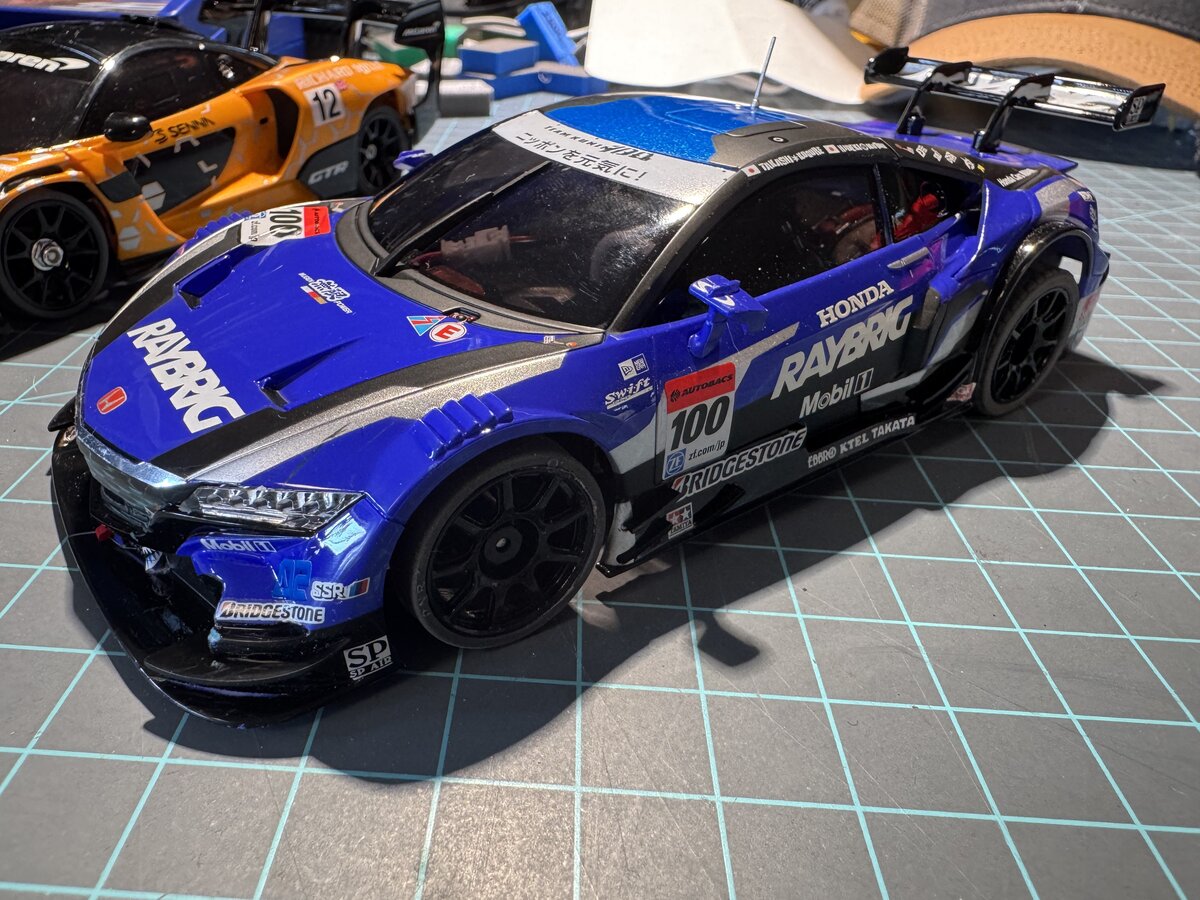
Most Mini-Z drivers install the medium-medium combo their spring set came with and leave it there. That’s fine if the car feels right. But if you’re fighting understeer on entry, or the rear keeps snapping loose every time you squeeze throttle, springs are the cheapest lever you can pull. The problem isn’t a lack of options. Nobody taught you how to translate what the car is doing into which spring to change.
This guide is the diagnosis layer. It tells you which end to stiffen or soften and why, based on what the car is doing. The mechanical reference that explains what springs, droop screws, and camber actually do in physical terms (and how to set each one from scratch) is the droop and camber guide. Read that first if you haven’t worked through those variables yet. This guide picks up where that one leaves off.
First: Drive the Car on Purpose
You can’t tune what you can’t feel. Before touching a spring, run three or four laps at 80% and pay attention to each corner in three phases, not just “lap time”:
- Entry: from braking until the car is rotated into the corner.
- Mid-corner: steady-state, constant radius, no throttle change.
- Exit: from throttle pickup until the car is straight.
The biggest mistake I see at club nights is drivers describing a handling issue in one phase and adjusting the spring for another. “The car oversteers” tells you nothing. “The car oversteers on throttle pickup at exit” tells you exactly what to change.
The Diagnosis Matrix
Scenario: You’re washing wide on corner entry. The front won’t bite and the car plows toward the outside barrier before you’ve finished turning in.
Corner-entry understeer. The front isn’t loading up under braking. The front springs are too stiff. They’re not compressing, so the nose isn’t dipping and the front tires aren’t being pressed into the track hard enough to hook up.
Fix: One step softer on the front. If you’re running Kyosho medium fronts, drop to soft. Re-run the corner. If it still pushes, check tires and camber before going softer. Endlessly soft fronts cause their own problems (sidewall roll, inconsistent feel).
Scenario: You turn in fine, but the rear steps out the moment you crack the throttle on exit. You’re counter-steering every corner to save it.
Corner-exit oversteer. The rear springs aren’t giving the tires time to plant before power hits them. Either they’re too stiff (weight transfers but the rear doesn’t squat enough to put the contact patch down), or more commonly on Mini-Z, too soft (the rear squats so much it unweights the outer edge of the tire).
Fix: On most stock chassis, try stiffer rear springs first. A stiffer rear keeps the chassis flatter on throttle pickup, which on a 1/28-scale car usually produces more stable exits. If stiffening makes it worse, go the other way. Some high-grip RCP setups benefit from more rear compression.
If you’ve run the rear a full step in both directions and neither one settles the exit, stop changing springs. A spring redistributes load that’s already on the car. It can’t create load that isn’t there, and on a green track or with worn rears that’s exactly what you’re short of. The Chassis Weight Tuning guide covers the other lever for this symptom: a few grams over the rear axle, in 3 to 5 gram steps, and what it costs you in turn-in.
Scenario: The car turns in eagerly but then darts unpredictably mid-corner. It feels twitchy and fast, but you can’t commit to it.
The chassis is too stiff overall. Both ends are reacting to every surface transition. This usually shows up when drivers installed stiff springs everywhere because “stiffer is faster.”
Fix: One step softer on both ends simultaneously. You give up a little initial response but gain the compliance that keeps tires loaded through surface imperfections. A softer car that’s always planted is faster than a stiff car you can’t commit to.
Scenario: The car feels lazy and numb. You turn the wheel and nothing happens for a beat. Transitions are slow.
The opposite problem. The chassis is too soft overall. The springs are absorbing too much of your steering input before the tires get the signal.
Fix: Stiffen both ends one step. Start with the front to improve initial response, then the rear to match. If stiffening the front alone makes the car oversteery, you’ve balanced into a new problem. Back off the front and stiffen the rear instead to get the same sharpening effect with better balance.
Scenario: The car understeers mid-corner, not at entry. You got it turned in, but it won’t hold the line through the apex.
Usually a rear-spring issue, not a front one. A too-soft rear squats and rolls mid-corner, which unloads the front outer tire and steals front grip right when you need it.
Fix: Stiffen the rear one step. The car should rotate more naturally mid-corner because the rear isn’t flopping over.
Scenario: Rear steps out on braking, before you’ve even started turning.
Entry oversteer under braking. Either the fronts are too soft (the nose dives so hard the rear fully unweights) or the rears are way too stiff (no rear compression, tires skip under weight transfer).
Fix: First try stiffening the front one step. If oversteer on trailing throttle persists, soften the rear one step. Never both at once. You won’t know which one fixed it.
Change One Variable at a Time
The cardinal rule: one change, one test session, one data point. Swap front and rear simultaneously and you’ve learned nothing about which end did what. Change one spring, run three clean laps, note the result, then change the next variable.
Write it down. Even a phone note:
- Lap 1: stock, oversteer on exit
- Lap 2: stiffened rear one step, exit better, entry push worse
- Lap 3: softened front one step, now balanced
That log becomes your personal setup bible for the track. Surfaces and tires change the answer, but the methodology is always the same.
Platform-Specific Notes
MR-03 (RWD): Most sensitive platform to front spring changes because the front end does the work of both braking and turning. Front spring rate is the single most impactful adjustment on this chassis. Run your favorite rear and tune the front until entry feels right. The MR-03 Platform Guide covers the broader setup context.
MR-04 (RWD Narrow): Similar behavior to MR-03 but with a narrower track width, which makes it more reactive to rear spring changes than the MR-03 is. Start one step softer at the rear compared to your MR-03 baseline. See the MR-04 Setup Guide for platform-specific tips.
MA-020 (AWD): Power distribution to all four wheels means rear squat on throttle isn’t punished the same way as on RWD. You can get away with softer rears than you’d run on an MR-03. The front is still the primary rotation control. Tune the front for entry, rear for traction balance. The MA-020 Platform Guide is the broader reference.
Tire and Surface Caveats
Spring tuning is meaningless if the tires are wrong. A medium-stiff front on high-grip RCP with 40-shore rubber is a completely different car than the same spring on slippery carpet with 30-shore slicks. If you’ve just moved to a new track or compound, reset to medium-medium, drive it, then diagnose from there. Don’t try to solve a tire problem with springs.
For tire selection, see the Tire Compound by Surface guide and Best Tires for RCP.
What to Buy
The key thing about Mini-Z springs is you want a variety pack, not just a single spring. Diagnosis-driven tuning only works if you can swap a step softer or a step stiffer on demand. A full spring assortment is a one-time $20–30 investment that lasts for years.
Full Spring Sets (Buy These First)
→ PN Racing Mini-Z Complete Spring Tuning Set on Amazon: The most comprehensive aftermarket set. Covers soft/medium/hard in a single pack and fits all MR-series chassis.
→ Kyosho Mini-Z Spring Set (Multi-Rate) on Amazon: OEM Kyosho spring assortment. Reliable fit, slightly narrower rate range than PN, but excellent baseline for club racing.
→ Yeah Racing Mini-Z Spring Tuning Kit on Amazon: Color-coded spring set with wider rate spread than stock. Good value if you want more data points between soft and hard.
T-Plate (Pairs With Springs)
If you’re adjusting springs without considering your T-plate, you’re only seeing half the picture. The T-plate controls rear chassis flex, which interacts directly with rear spring behavior. See the T-Plate Setup Guide for how to tune the two together.
→ PN Racing Mini-Z T-Plate Set on Amazon
The Tuning Mindset
Spring selection isn’t a destination. It’s a conversation with the car. The drivers who win club nights aren’t the ones with the most expensive setups. They’re the ones who can feel a balance change, describe it, and make one correct adjustment to fix it.
Start with a known baseline. Drive it enough to hear what it’s saying. Change one end by one step. Drive it again. You’ll have a setup dialed for your tires and track in three or four sessions. And more importantly, you’ll understand why it works.
For droop and camber context, circle back to how to set droop and camber from scratch. For foundational chassis work that has to be right before spring tuning pays off, the First 5 Upgrades is the place to start. Once you have a working baseline and want a quick lookup table by chassis and surface, the Mini-Z Spring Rate Reference Chart is the companion reference: front and rear recommendations for MR-03, MR-04, and MA-020 by surface type, without the tuning explanation. Browse springs, sway bars, and T-plates together on the Shop Suspension Parts page.
Prices are approximate and change often. Check the listing for current pricing.
The Kyosho-branded carbon T-plate I run on the MR-03. Consistent flex, durable, fits the stock geometry without drama.
Shop →Medium flex carbon T-plate for MR-03 MM chassis. The most-run option for general RCP use.
Shop →0.75mm graphite plate. Fits MR-03 and MR-04 MM chassis. Consistent flex, lighter than carbon.
Shop →OEM spring set plus front and rear sway bars. Covers most balance adjustments.
Shop →OEM front spring assortment for the MR-03 EVO chassis. The reference set to tune from before going aftermarket.
Shop →