Mini-Z Setup Sheet by Surface: Carpet, Asphalt, RCP, and Drift
Mini-Z setup baselines by surface in chart format: tire compound, spring rate, diff oil, and gyro settings for carpet, RCP foam, asphalt, and drift.
MR-03 · MR-04 · MA-020
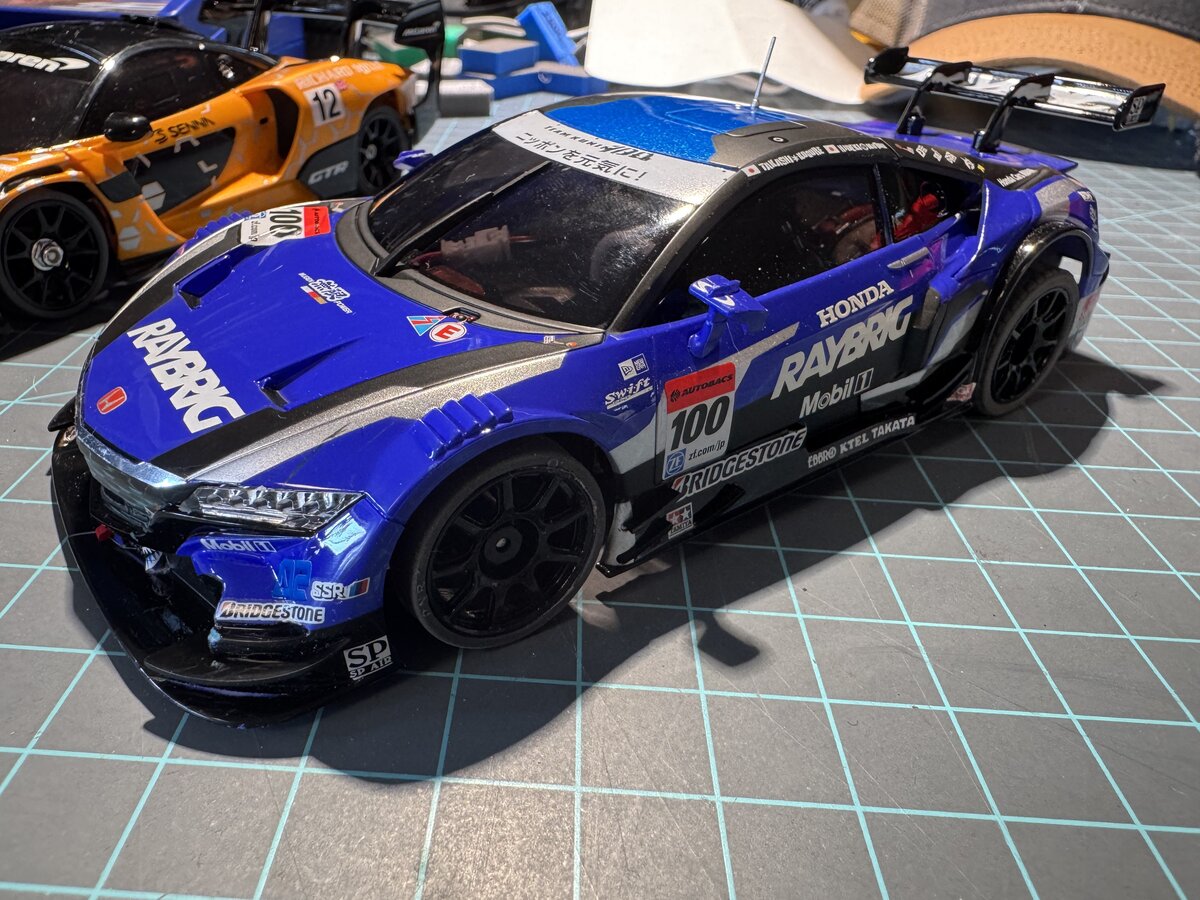
Every club has that one person who runs the same setup everywhere. Carpet night, asphalt parking lot, indoor RCP oval, outdoor drift session: same springs, same tires, same diff oil, zero adjustments. That person loses a lot of races they should win.
Surface changes everything. The grip level shifts by 30 to 50 percent between high-grip RCP and typical club carpet. That same shift changes how your springs load the tires, how your diff behaves through corners, and whether your gyro is helping or fighting you. A chart-format reference does not exist anywhere online for Mini-Z setups. What you find is scattered forum threads and club-specific advice that assumes you already know which questions to ask.
This guide is the chart. Use it as a starting baseline. Tune from there.
Not sure what the fields in a setup chart actually mean? The how to read a setup sheet guide explains every field before you start adjusting.
How to Use This Chart
Each row is a running surface. The columns are the variables that change most meaningfully between surfaces. Think of each cell as your starting position, not your final answer.
The tuning process: set these baseline numbers, drive five laps paying attention to entry, mid-corner, and exit separately, then adjust one variable at a time using the spring rate diagnosis guide for spring changes and the tire compound guide for compound changes.
Platform note: the chart below applies to MR-03 and MR-04 RWD platforms. MA-020 AWD notes follow at the end.
Surface Baseline Chart
| Surface | Front Tire Compound | Rear Tire Compound | Front Spring | Rear Setup | Diff Oil | Gyro Gain |
|---|---|---|---|---|---|---|
| RCP (indoor foam) | 30-40 shore | 20-30 shore | Medium | T-plate: medium | 3,000-10,000 cSt | 50-65% |
| Carpet (club race) | 30-40 shore | 30-40 shore | Medium to soft | T-plate: medium | 10,000-30,000 cSt | 40-55% |
| Asphalt (outdoor) | 20-30 shore | 20-30 shore | Soft | T-plate: soft to medium | 3,000-7,000 cSt | 60-75% |
| Drift (RCP or tile) | 40-50 shore | 30-40 shore | Stiff | T-plate: stiff | 30,000-100,000 cSt | 20-40% |
Lower shore = softer compound = more grip. Higher shore = harder = less grip. The relationship is counterintuitive until you have driven it a few times.
RCP Setup (High-Grip Indoor Foam)
RCP foam is the highest-grip surface you will run on. The foam has a texture that locks onto soft tires and generates more lateral grip per square inch than anything else. This is where Mini-Z racing actually happens at most indoor clubs.
The critical variables on RCP are rear compound and front spring. Too soft a rear on high-grip RCP causes traction rolling, where the car tips over mid-corner because the outside tire is generating more grip than the chassis can absorb. Too stiff a front means the car pushes on entry instead of rotating cleanly.
| Variable | Baseline | Tuning Direction |
|---|---|---|
| Front tire | 30-40 shore slick | Harder if car oversteers on entry; softer if it understeers |
| Rear tire | 20-30 shore radial | Harder if traction rolling; softer if understeer on throttle exit |
| Front spring | Medium | Softer for more entry rotation; stiffer to tame snap oversteer |
| T-plate | Medium carbon | Softer for more rear flex on slow corners; stiffer for high-speed stability |
| Diff oil | 5,000-10,000 cSt | Thicker for smoother corner exit; thinner if car feels locked mid-corner |
| Gyro gain | 50-65% | Higher if rear snaps; lower if steering feels numb or fights itself |
What to Buy: RCP Setup
For RCP racing, the standard rear tire is the Kyosho Radial Wide 20 shore. It is the most-tested compound on the surface and what most club racers run as a baseline.
Kyosho Mini-Z Radial Tire 20 Degree (Rear) on Amazon
The matching front slick for most RCP conditions is the 30 shore Low Height slick.
Kyosho Mini-Z Low Height Slick Tire 30 Degree (Front) on Amazon
If you run a gyro and have not dialed gain per surface, the DasMikro is the current first recommendation for plug-and-play install on MR-03 and MR-04.
DasMikro Mini-Z Gyro on Amazon
Carpet Setup (Club Race / Low-to-Medium Grip)
Carpet grip varies wildly. Freshly laid club carpet grips almost as well as RCP. Worn carpet from three seasons of Thursday night racing is closer to a slippery hard floor. The baseline below is for typical mid-life club carpet, which is the condition most people actually race on.
The big difference from RCP: carpet has more surface variation. Loose fibers, seams, and inconsistent texture mean the car needs more suspension compliance to stay planted through a full stint. Stiffen everything relative to your RCP setup and the car will skip and chatter. The spring rate that felt perfect on foam will push on carpet entry.
| Variable | Baseline | Tuning Direction |
|---|---|---|
| Front tire | 30-40 shore | Softer if entry push is severe; harder if car snaps on worn, slippery sections |
| Rear tire | 30-40 shore | Match front to start; softer if exit understeer persists |
| Front spring | Medium to soft | Softer than RCP baseline to absorb surface variation |
| T-plate | Medium | Softer T-plate helps if rear chatters on rough carpet sections |
| Diff oil | 10,000-30,000 cSt | Thicker than RCP because carpet rewards a slightly locked diff on exit |
| Gyro gain | 40-55% | Lower than RCP; carpet provides its own smoothing effect |
Beginners often run the same compound on carpet as RCP and wonder why the car feels wrong. The 10 to 15 shore difference between surfaces is the answer most of the time.
What to Buy: Carpet Setup
The 30 shore radial covers both front and rear on most club carpet surfaces.
Kyosho Mini-Z Racing Radial Tire 30 Degree on Amazon
Spring variety matters more on carpet because the grip level changes as the surface wears through a race day. A full spring assortment set means you can adjust at the pits instead of guessing.
Kyosho Mini-Z Spring Set (Multi-Rate, MR-03/MA-020) on Amazon
Asphalt Setup (Outdoor Hard Surface)
Outdoor asphalt is the most variable surface on this list. Temperature, texture, dust, and moisture all change the grip window throughout a session. The baseline here is for a clean, dry outdoor lot in moderate temperatures, which is the best case. Real outdoor conditions usually require mid-session adjustments.
Asphalt is typically lower grip than RCP but with more mechanical bite than smooth indoor surfaces. The car skids differently than on foam: slides are longer and more recoverable. Gyro gain runs higher here because the longer slide duration means the gyro has more time and angle to work with.
| Variable | Baseline | Tuning Direction |
|---|---|---|
| Front tire | 20-30 shore | Softer to maximize grip on medium-bite surface; harder if overheating |
| Rear tire | 20-30 shore | Match front compound; softer end of range on rougher asphalt |
| Front spring | Soft | Outdoor surface variations are larger; more compliance needed than indoor |
| T-plate | Soft to medium | Soft T-plate on rough asphalt absorbs micro-bumps that break rear loose |
| Diff oil | 3,000-7,000 cSt | Thin for outdoor; thicker diff slows exit on low-bite, powdery asphalt |
| Gyro gain | 60-75% | Outdoor slides are longer and faster; higher gain catches them earlier |
A practical note: if you only run outdoor asphalt occasionally, start with your RCP rear compound and softer-than-RCP front spring. Most drivers are not running pure-outdoor setups from scratch. They are adapting an existing RCP tune. The softer front spring and a step softer rear compound are usually the only two changes needed to get the car behaving reasonably.
What to Buy: Asphalt Setup
Soft compound front tires for outdoor use. The 20 shore puts maximum rubber on a surface that needs it.
Kyosho Mini-Z Radial Tire 20 Degree on Amazon
Adjustable diff oil is cheap and makes a large difference on asphalt. The Kyosho spring set in the carpet section doubles here if you are carrying one kit for both surfaces.
Kyosho Mini-Z Spring Set (Multi-Rate) on Amazon
Drift Setup (RCP Tile or Hard Floor)
These numbers are the chart version. For the full reasoning behind them, plus platform-by-platform diff and throttle setup, see the Mini-Z Drift Setup guide.
Drift is different enough from the other surfaces that most of the above rules invert. You are not trying to maximize traction or stability. You are trying to maintain controlled rear-end breakaway at speed. The setup language changes accordingly.
The key variables for drift are diff oil and gyro gain. A locked-down diff (thick oil) and low gyro gain let the rear step out on command and stay there. High gyro gain and thin diff oil fight against what you are trying to do.
| Variable | Baseline | Tuning Direction |
|---|---|---|
| Front tire | 40-50 shore | Harder front reduces front grip so you can steer into a slide without hooking up |
| Rear tire | 30-40 shore | Medium grip so the rear breaks away predictably but does not spin freely |
| Front spring | Stiff | Stiff front keeps the nose up through slides and prevents front tuck |
| T-plate | Stiff | Stiff T-plate on drift setup keeps the rear from flopping; you want chassis rigidity |
| Diff oil | 30,000-100,000 cSt | This is the primary drift setup variable. Higher = more locked = more angle |
| Gyro gain | 20-40% | You want rear breakaway. High gain fights it. Keep gain low or dial it out entirely on freestyle drift |
One note on gyro for drift: some drift drivers run zero gain and use the gyro only as a physical weight for chassis balance. That is a valid approach on pure drift setups. If you are transitioning between grip and drift in the same session, keeping some gain (20-30%) helps on the grip corners without killing your slide angle.
What to Buy: Drift Setup
Thick diff oil is the single highest-impact drift mod. The Kyosho MZW423 front spring set is the other main investment: having the full soft-through-stiff range on the front lets you tune the nose behavior without guessing.
Kyosho Front Spring Set (MR-03) on Amazon
MA-020 AWD Notes
The AWD platform behaves differently enough that it deserves separate notes. The chart above applies to RWD (MR-03, MR-04). For the MA-020:
Rear spring rate matters more. RWD rear setup is primarily controlled through the T-plate. AWD has both front and rear springs as active tuning variables. The MA-020 rear spring interacts with all-wheel drive in ways that feel different from anything in the RWD chart.
Compound balance shifts. On AWD, you can often run softer rear compound than on RWD because the front drive wheels prevent the rear from fully stepping out. This makes AWD setups on RCP more stable but also means the car understeers more by default. Front compound is the primary rotation tool on AWD, not the T-plate.
| Surface | Front Tire | Rear Tire | Front Spring | Rear Spring | Gyro |
|---|---|---|---|---|---|
| RCP | 30-40 shore | 20-30 shore | Medium | Medium-soft | 40-55% |
| Carpet | 30-40 shore | 30 shore | Soft-medium | Medium | 30-45% |
| Asphalt | 20-30 shore | 20-30 shore | Soft | Soft-medium | 50-65% |
For MA-020 platform-specific setup context, the MA-020 Platform Guide covers the AWD drivetrain variables that interact with surface setup decisions.
Building Your Own Setup Log
The chart above gets you to a reasonable starting point. The chart you build yourself through testing is what actually wins races.
Keep a phone note or a folded paper in your pit box. After each session, write down:
- Surface and conditions
- What the car was doing wrong (be specific: entry push, exit snap, mid-corner drift)
- What you changed
- What improved and what did not
After three or four sessions on the same surface, you will have your own personalized version of this chart. The baseline numbers will shift because your track, tires, and driving style are slightly different from the general case. That is expected. The value of a reference chart is that it gives you a starting point calibrated to actual Mini-Z behavior, not a blank page. It is also exactly why a setup dialed at your home track can fall apart at someone else’s: the chart above changes the surface variable for you, but layout, grip level, and unfamiliarity still have to be relearned on the day.
For setup sheet field definitions, the how to read a setup sheet guide walks through every field in order. For spring rate changes specifically, spring rate tuning by symptom covers the diagnosis layer. For tire compound selection, the tire compound by surface guide has the full framework with axle-isolation tuning steps.
Related Guides
- Shop Tires: compound and width picks for every surface
- How to Read a Setup Sheet: every setup field defined before you start adjusting
- Spring Rate Tuning by Symptom: diagnose understeer, oversteer, and twitchy balance by what the car is doing
- Tire Compound by Surface: the 3-pass tuning method for compound selection
- T-Plate Setup Guide: rear flex tuning for RWD platforms
- Gyro Setup Guide: installation and gain tuning for MR-03 and MR-04
- Mini-Z Drift Setup Guide: the full drift build behind the drift baselines above
- MA-020 Platform Guide: AWD-specific setup context
Reddit thread angle: “I built a setup baseline chart for carpet vs. RCP vs. asphalt vs. drift because I kept starting from scratch every time the surface changed. Here is what I run in each configuration and why.” Post for r/miniz as personal reference, invite the community to share what they have found differs on their specific tracks.