Mini-Z T-Plate Setup Guide: Flex Ratings, Materials, and When to Change
Carbon over plastic, medium flex to start, and one specific symptom that tells you to go stiffer. The complete T-plate decision guide for MR-03 and MR-04.
MR-03 · MR-04
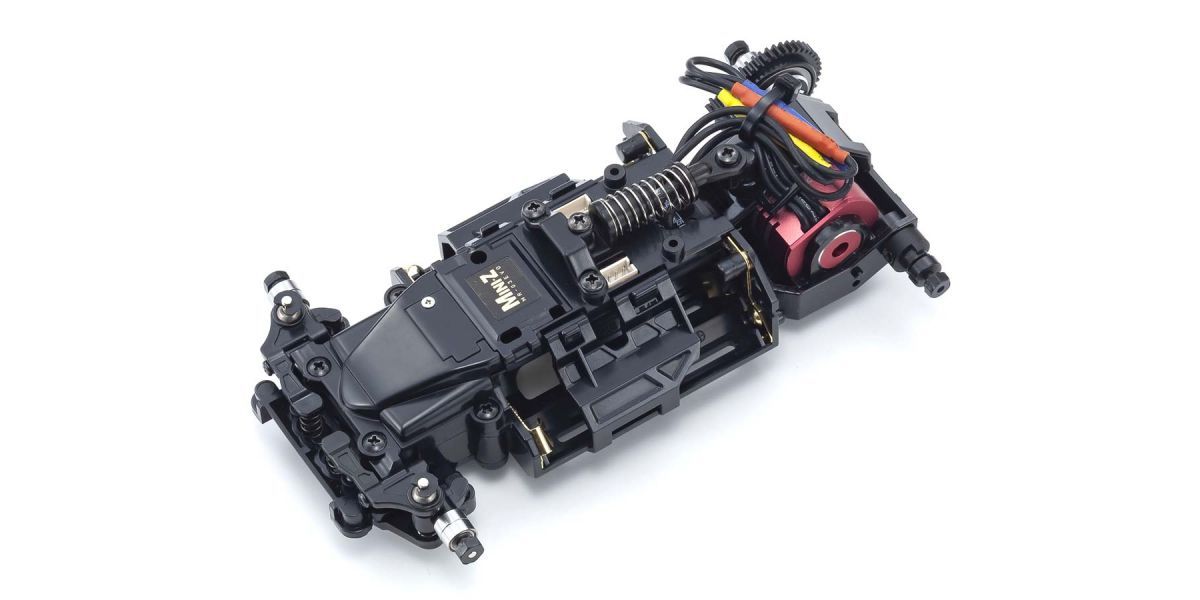
The T-plate is the flat plate at the rear of the Mini-Z chassis that spans the rear axle flex point. On rear-wheel-drive platforms like the MR-03 and MR-04, it is the single most significant tuning part on the car. Understanding what it does and why lets you tune by feel rather than guessing. Ready to upgrade? → Mini-Z Carbon T-Plate on Amazon
What the T-Plate Actually Does
When you accelerate out of a corner, the rear axle pushes the car forward while the chassis is still rotating. The T-plate controls how that transition happens: it either resists the flex (stiff) or allows it (soft).
A stiffer T-plate keeps the rear axle more planted. The car feels more stable and predictable on high-grip surfaces. The downside is reduced compliance over bumps and surface variation. The car can feel locked in or nervous when the surface is inconsistent.
A softer T-plate allows more rear flex. The rear settles over bumps and surface irregularities, which improves rear traction in low-grip conditions. The car can feel more compliant, but the softer feel requires more precise driving to keep consistent at the limit.
Materials
Stock plastic: Unpredictable flex characteristics that change as the plate heats up and fatigues. Not a tuning tool. The first thing to replace.
Carbon fiber: Consistent, stable flex that doesn’t change with temperature or age. The standard choice for any serious setup. PN Racing and Atomic both make well-regarded options.
Graphite: Similar to carbon fiber with a slightly different flex feel. Yeah Racing’s graphite plates are a good mid-range option. Consistent behavior at a lower price point than carbon.
Aluminum: Very stiff. Used as a maximum-stiffness option on the highest-grip tracks. Not a general-purpose choice.
Flex Ratings
Most aftermarket T-plates come in multiple ratings:
- Soft / Ultra Soft: More rear compliance. Best for carpet, low-grip hardwood, or bumpy surfaces where the car needs to absorb rather than fight the terrain.
- Medium: The starting point for most drivers. Works well on RCP at moderate grip levels. Where the majority of competitive setups end up.
- Stiff / Hard: For high-grip RCP. Provides the planted feel needed when tires have maximum bite. The car can put power down cleanly without the rear moving around.
- Ultra Hard / Aluminum: Competition use on very high-grip tracks with sticky tires. Not the right starting point.
Start with medium. Only move from there once you’ve identified a specific handling problem the T-plate should address.
Reading the Car
The T-plate is the right adjustment when you observe:
Oversteer on corner exit: The rear steps out when you get on throttle. This usually means the rear needs more resistance. Try a stiffer T-plate. The increased stiffness keeps the rear planted as power is applied.
Understeer / pushing wide: The front washes out through corners. This can mean the rear is too planted while the front can’t keep pace. Try a softer plate to let the rear flex slightly and balance the car.
Inconsistent rear across a session: The car handles differently on the first lap versus later laps, or handles differently depending on how long the corner is. This often points to a flex characteristic that’s changing with temperature, which is the main symptom of a worn stock plastic plate.
MR-04 Note
The MR-04’s narrower track width makes it more sensitive to T-plate stiffness than the MR-03. What feels like a medium stiff setup on an MR-03 can feel significantly stiffer on the MR-04. If you’re coming from MR-03 setup experience, start one step softer than you would on the wider platform and adjust from there.
Installation
T-plates are retained by two screws at the rear. The swap takes under two minutes:
- Remove the body and rear bumper/wing.
- Unscrew the two rear T-plate mounting screws (1.5mm hex).
- Slide the old plate out rearward. It lifts free with no clips.
- Insert the new plate, seat it fully, and replace the screws. Do not overtighten. These are small screws in a plastic mount and will strip if forced.
The quick swap time is what makes the T-plate such a useful in-session tuning tool. You can change plates between runs in the time it takes to re-glue a tire.
What to Buy
A medium-flex carbon T-plate is the right starting point for most drivers. Buy a set that includes multiple flex ratings. You’ll want soft and stiff options available once you’re dialing in a specific surface.
Carbon T-Plate Sets (multiple flex ratings):
NexxSpeed Carbon Fiber T-Plate M (Medium) for Mini-Z MR-03 (Amazon)
Yeah Racing Carbon Graphite T-Plate for MR-03 (Amazon)
Atomic RC T-Plate Set for Mini-Z (search “Atomic RC Mini-Z T-plate” at your usual retailer)
If you’re just starting out and want one plate before committing to a full set, buy the medium. It covers the widest range of conditions and gives you a real baseline to compare against.
One Change at a Time
T-plate stiffness interacts with tire compound, tire width, and surface grip. If you change multiple variables at once you won’t know what improved the handling.
Change the T-plate first. Drive a minimum of five focused laps noting the specific behavior you’re targeting. Then adjust. This discipline sounds obvious but is easy to skip when you’re at the track with a pile of plates and a 20-minute break.
For where T-plate fits in the full upgrade sequence, see the First 5 Upgrades guide or the Mini-Z Upgrades guide for the complete multi-tier path. Once you have the T-plate sorted, front spring rate is the next suspension variable. The droop and camber setup guide covers how springs interact with what the T-plate is already doing, and explains droop and camber as the final mechanical variables to dial in. T-plate stiffness also interacts with gear ratio. A stiffer plate on a smaller pinion behaves differently than the same plate paired with a taller gear. The Mini-Z Pinion Gear Ratio Reference covers how pinion selection affects the feel the T-plate is tuning against. And if you’ve fixed the T-plate but still have a handling symptom that doesn’t respond, the Spring Rate Tuning guide walks through diagnosis by symptom: what the car is telling you and which spring change fixes it. For how to inspect a T-plate for hairline cracks and when to replace it, see the Mini-Z Wear Points reference. One more thing to re-check: if you’ve added rear ballast chasing exit traction, go back and reassess the plate. More mass hanging behind the mounting point loads the plate harder, so a flex rating that was correct on a lighter car can start feeling soft for reasons that have nothing to do with the plate itself. The Chassis Weight Tuning guide covers that interaction from the weight side. Browse T-plates, springs, and sway bars together on the Shop Suspension Parts page.
Product images courtesy of Kyosho.
Prices are approximate and change often. Check the listing for current pricing.
The Kyosho-branded carbon T-plate I run on the MR-03. Consistent flex, durable, fits the stock geometry without drama.
Shop →Medium flex carbon T-plate for MR-03 MM chassis. The most-run option for general RCP use.
Shop →0.75mm graphite plate. Fits MR-03 and MR-04 MM chassis. Consistent flex, lighter than carbon.
Shop →OEM spring set plus front and rear sway bars. Covers most balance adjustments.
Shop →OEM front spring assortment for the MR-03 EVO chassis. The reference set to tune from before going aftermarket.
Shop →