Mini-Z Ball Diff vs Gear Diff: Which One to Run and When
Ball diff wins on RCP if you maintain it. Gear diff wins if you don't want maintenance overhead. Exact decision by surface, platform, and driving level.
MR-03 · MA-020
The diff question comes up constantly in Mini-Z forums, and the answers are usually vague. “Ball diff is smoother.” “Gear diff is more consistent.” Both true, neither useful without context.
Here’s the practical breakdown: what each type does to handling, which surface and style it’s better suited for, and what to actually buy if you’ve decided to upgrade.
What a Differential Does
A differential allows the left and right wheels on an axle to spin at different speeds. When you corner, the outside wheel travels a longer arc than the inside wheel. Without a diff, the drivetrain would bind, scrub speed, and make the car fight itself through every corner.
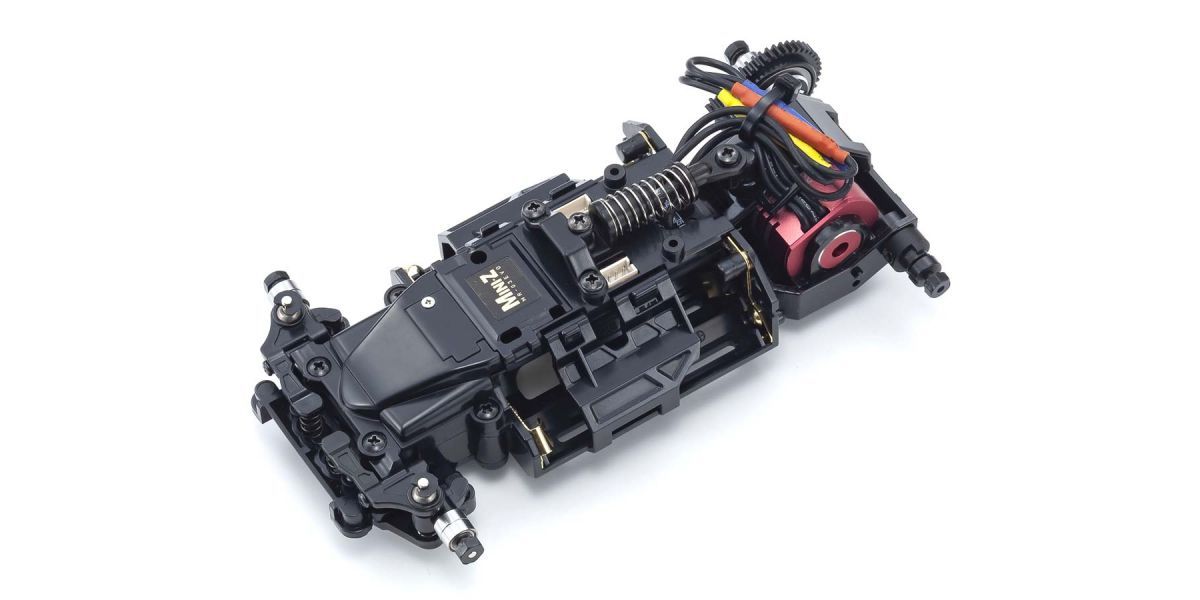
On the Mini-Z MR-03 and MR-04, the rear differential is the primary tuning variable. On the MA-020 AWD, you have front and rear diffs to work with, which multiplies both the options and the complexity.
The question isn’t which diff is universally better. It’s which diff behavior matches your track, surface, and driving style.
Gear Differential
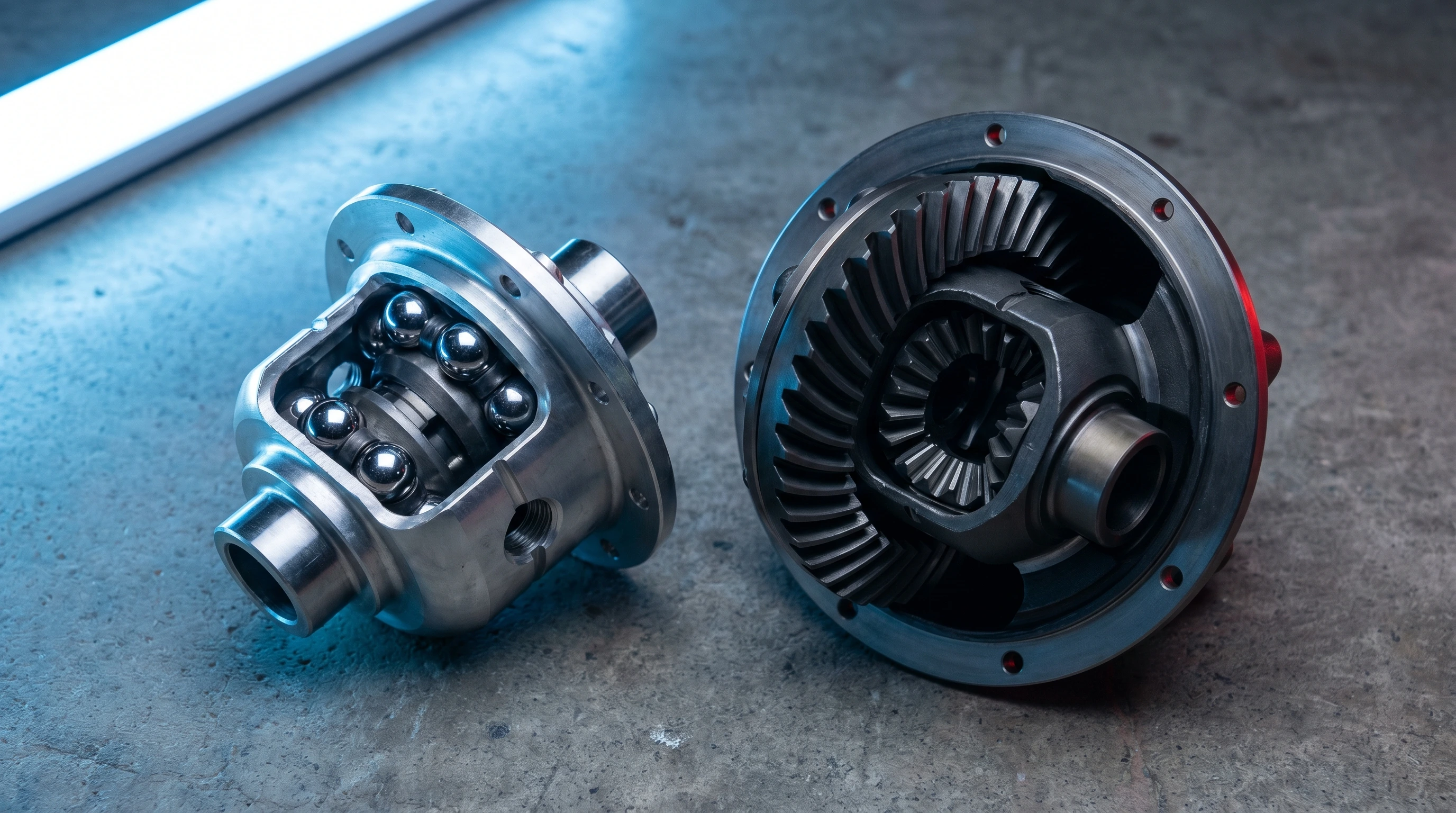
The gear diff uses a set of spider gears (bevel gears) to distribute torque between the two outputs. It’s the simpler design and it’s what most Mini-Z platforms ship with from the factory.
How it behaves:
- Under power, a gear diff transfers torque to whichever wheel has less resistance. If one side loses traction, power goes there instead of the side that can use it.
- Cornering behavior is predictable and consistent. The diff “opens” smoothly without requiring maintenance or break-in.
- No preload to set, no balls to wear down. Assemble it correctly and it runs.
Best for:
- Beginners who don’t want to maintain a ball diff
- Smooth, consistent tracks (RCP, polished tile)
- Drivers who prioritize predictability over extracting maximum grip
- MA-020 front axle if you’re not chasing lap times
Limitation: Gear diffs can feel slightly loose on corner exit because torque management isn’t as tight. On a bumpy or variable-grip surface, the power can transfer unpredictably to the wrong wheel.
Ball Differential
The ball differential uses a set of steel balls (typically 6-12) caged between two thrust faces. Friction between the balls and the faces determines how freely the diff opens. Tighten the preload nut for more resistance and a more locked behavior. Back it off and the diff opens more freely.
How it behaves:
- Adjustable preload lets you tune how much the diff resists slip. Tighter means more torque transfer to both wheels simultaneously (locked feel); looser behaves more like a gear diff.
- Under hard acceleration, a properly set ball diff keeps both wheels pulling evenly, reducing inside-wheel spin and improving drive off corners.
- At the limit, a ball diff gives the driver more feedback about what the rear is doing.
Best for:
- RCP carpet racing where extracting clean drive out of corners matters
- Drivers who are comfortable doing maintenance (balls wear and need inspection)
- MR-03 rear axle on a smooth, high-grip track
- MA-020 rear axle when you want tight, consistent power delivery
Limitation: Ball diffs require maintenance. The balls and thrust faces wear over time, and a worn ball diff behaves erratically, giving you slip you didn’t ask for. If you’re not willing to clean and inspect the diff occasionally, you’ll eventually wonder why your car is driving weird. The answer is usually a worn diff.
Preload: The Setting Nobody Talks About Enough
Ball diff preload is set by tightening the diff nut against the spring pack. The right setting depends on your surface and driving style, but here’s a concrete starting point:
For RCP track racing (MR-03 rear): Set preload so the diff requires light-to-moderate resistance to turn by hand. Not so tight that it locks completely, not so loose it spins freely. A common test: hold one output shaft and turn the other. It should require about the same effort as a firm pinch between thumb and forefinger.
For carpet or lower-grip surfaces: Back off the preload 1/4 turn from your RCP baseline. A slightly looser diff helps the car rotate through slow corners without fighting itself.
For AWD front diff on MA-020: Typically run looser than the rear. The front diff’s job is mostly to prevent front-end binding, not to manage power delivery the way the rear does.
Platform-Specific Notes
MR-03 (RWD)
The stock MR-03 ships with a gear diff. For casual driving and occasional club racing, it’s fine. For competitive RCP racing, most club regulars run a ball diff rear. The cleaner corner exit is worth the maintenance overhead.
Kyosho discontinued the old Ball Differential Set II (MZW206) that used to be the default here. The current standard for the MR-02/MR-03 is the NEXX Racing 64P ceramic ball diff. It’s well-machined, lasts a long time when maintained, and has a documented preload sweet spot that’s easy to find. → NEXX Racing Mini-Z 64P Ceramic Ball Diff on Amazon
If you don’t want to maintain a ball diff but still want better traction control, an alternative is to run the gear diff with a slightly stiffer T-plate. The extra rear stability partially compensates for the diff’s lower precision.
MR-04 (RWD Narrow)
Same logic as MR-03. The MR-04’s narrower track makes it slightly more sensitive to diff behavior. A loose ball diff on an MR-04 shows up as more rear oversteer than the same setting on an MR-03. Start with moderate preload and tighten from there. If you’re on the MR-04 EVO2, buy the chassis-specific Kyosho MR-04 EVO2 Ball Differential Set (MZW705) rather than an MR-03 part. → Kyosho MR-04 EVO2 Ball Differential Set on Amazon
MA-020 (AWD)
On the MA-020, you’re managing two diffs. Front and rear interact with each other, and the combination of settings affects how the car steers under power.
Common starting point for club racing: gear diff front, ball diff rear. The rear ball diff gives you precise power delivery at the driven end where it matters most. The front gear diff keeps the front end simple and eliminates one maintenance variable.
Running ball diffs on both axles is a valid setup for high-level competition (maximum tuning range) but adds complexity. For most club racers, front gear/rear ball is the best tradeoff.
Want the opinion version instead? Stop Overthinking It is the first-person take on what to actually run at club night and what the forum arguments keep getting wrong. This page is the technical reference.
What to Buy
MR-03 Ball Differential
The Kyosho Ball Differential Set for MR-03 is the standard club upgrade. Well-machined, consistent preload, compatible with standard MR-03 motor pods. Two versions exist: steel ball (linked in the MR-03 section above) and tungsten ball. The tungsten version lasts longer under heavy use but costs more. For most club racers, the steel version is the right call.
→ PN Racing Tungsten Ball Diff for MR-03 on Amazon
For MR-03 gear diff replacement (if you want OEM-spec feel with fresh parts): the Kyosho replacement diff set is available direct from Kyosho America and fits all MR-03 variants.
MA-020 Ball Differential (Rear)
→ Kyosho MA-020 Rear Ball Diff on Amazon
Yeah Racing also makes a competitive ball diff for the MA-020 at a slightly lower price point. Performance is comparable to the Kyosho unit at the club level.
The Short Answer
Run a gear diff if:
- You’re new to tuning and don’t want maintenance overhead
- You’re running MA-020 front axle
- You’re on a bumpy or inconsistent surface
Run a ball diff if:
- You’re racing RCP or clean carpet regularly
- You want precise, tunable drive on corner exit
- You’re willing to inspect and clean it occasionally
The diff upgrade isn’t the first thing you should do. Sort your tires and bearings first (see First 5 Upgrades or the Mini-Z Upgrades guide for the full sequence). But once those are right, a well-set ball diff rear is one of the cleaner performance improvements available on both RWD and AWD platforms. See the MR-03 Platform Guide or MA-020 Platform Guide for where the diff fits in the full build sequence. For what to inspect on a diff as it wears, including scoring on the diff rings, see the Mini-Z Wear Points reference. The maintenance schedule has you servicing a ball diff every 5 sessions. Not sure if a ball diff is actually the next upgrade your lap times need? The Diminishing Returns Trap guide covers the four upgrade patterns that stop helping and gives a four-step check before you buy. Once you’re at the point of logging and comparing setups, the How to Read a Setup Sheet guide explains how diff preload notes fit into the full picture alongside springs, T-plate, and compound. Browse the full range of diffs, T-plates, and springs on the Shop Suspension Parts page.
Product images courtesy of Kyosho.
Prices are approximate and change often. Check the listing for current pricing.
The Kyosho-branded carbon T-plate I run on the MR-03. Consistent flex, durable, fits the stock geometry without drama.
Shop →Medium flex carbon T-plate for MR-03 MM chassis. The most-run option for general RCP use.
Shop →0.75mm graphite plate. Fits MR-03 and MR-04 MM chassis. Consistent flex, lighter than carbon.
Shop →OEM spring set plus front and rear sway bars. Covers most balance adjustments.
Shop →OEM front spring assortment for the MR-03 EVO chassis. The reference set to tune from before going aftermarket.
Shop →