MA-020 AWD Setup: Tuning Grip on the Mini-Z AWD Platform
How to actually set up an MA-020 for grip racing. Diff oil, belt tension, tire balance, spring selection, and the AWD-specific mistakes that cost lap time.
MA-020
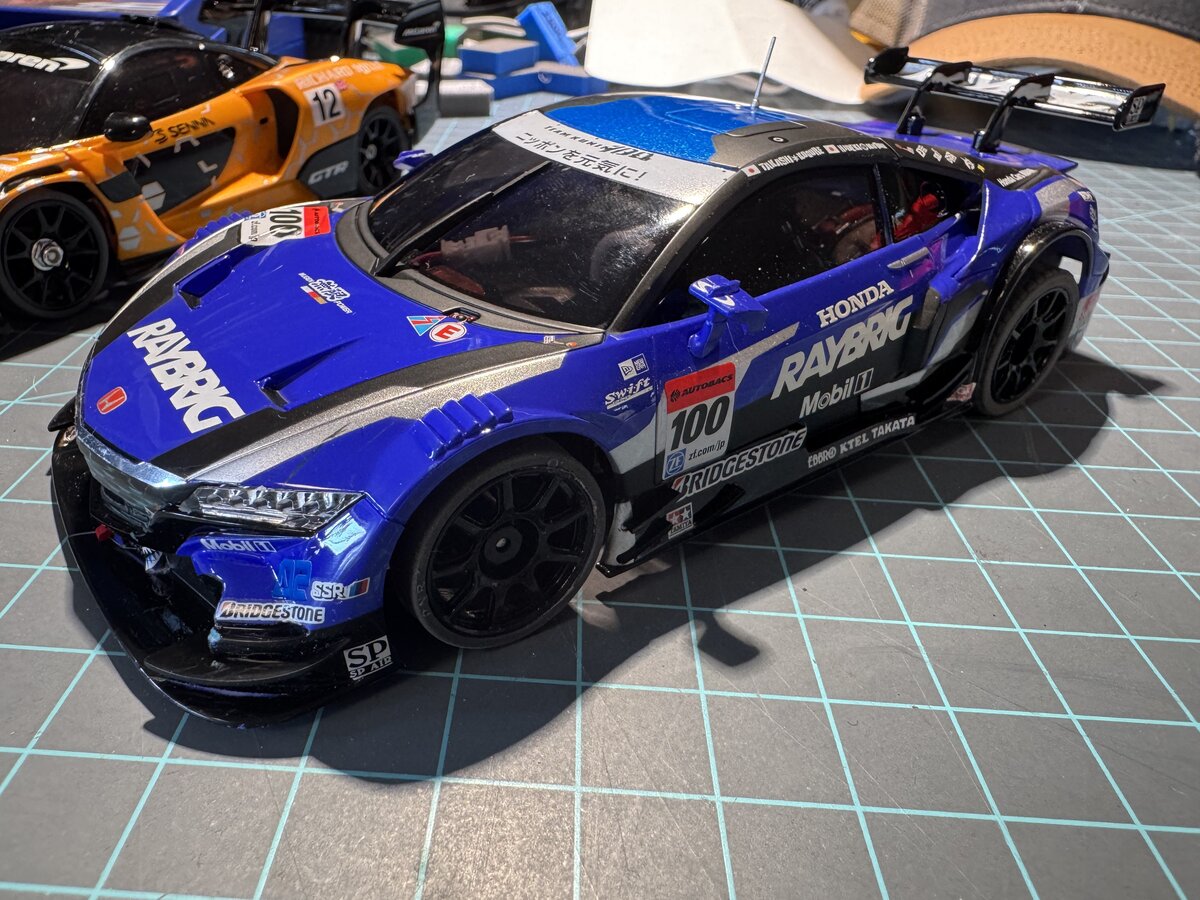
The MA-020 is the platform that teaches you something new every session if you let it. Setup that works on your MR-03 probably won’t transfer here, and that’s not a bug. It’s just AWD physics. All four wheels driving changes what the car needs from you.
I’ve spent enough time at the bench and on RCP with the MA-020 to know which adjustments actually move the lap time needle and which ones are fiddling for fiddling’s sake. This guide covers the setup chain in order: differential tuning, belt maintenance, front/rear tire balance, spring and damper selection, and the mistakes that cost most people without them realizing it.
If you’re brand new to the MA-020, start with the MA-020 Platform Guide for the full context. If you’re already building or converting to drift, the MA-020 Drift-to-Grip guide is the faster path.
Understanding What You’re Working With
AWD grip bias is the defining characteristic here. The MA-020 has more mechanical grip than an RWD car on corner exit because all four tires are pulling. That’s the upside. The trade-off is that the car tends toward understeer, pushing wide on entry rather than rotating cleanly.
Everything in MA-020 setup is about managing that push. You want the car to rotate willingly on entry, grip on exit, and drive off corners in a straight line without chasing the tail. When those three things are happening, you’re in a good window.
Differential Oil Tuning
This is the highest-leverage lever on the MA-020 and the one most people set and forget after the first build.
Diff oil viscosity controls how much the differential slips under load. Thicker oil locks the diff more (less slip, more traction). Thinner oil allows more slip (more rotation, looser feel).
Rear differential:
- Thicker oil (2000wt and up) reduces rear slip and helps the car rotate. If the car pushes wide and won’t come around on entry, this is the first thing to address.
- Thinner oil (500-1000wt) gives more rear slip. Drift setups run very thin rear diffs for a reason. Grip racing on RCP is not that use case.
- Start at 1000-1500wt. Drive it. Adjust from there.
Front differential:
- Thicker front diff oil increases front grip and helps pull the car through the corner on exit.
- Beginners often run whatever the car shipped with and never touch the front diff. That’s fine as a starting point, but most fast MA-020 setups are running thicker front diff oil (around 2000-3000wt) to help with understeer on exit.
- If the car drives off corners wide even after getting the entry to rotate, this is the first thing to try.
The relationship between front and rear diffs is interactive. Change one at a time, drive a few laps, evaluate. Changing both simultaneously makes it impossible to know what’s working.
Kyosho Silicone Differential Oil #1200 (Amazon)
Drive Belt Maintenance
The MA-020’s AWD system runs through a drive belt connecting front and rear differentials. The belt is not a set-and-forget component. It requires regular inspection and proper tension.
Tension: Under light finger pressure, the belt should flex slightly, not saggy and not drum-tight. Slack belt = power slippage under acceleration and inconsistent delivery through the drivetrain. Over-tightened belt = increased friction, more heat in the motor, and wear on the pulleys. Adjust with the tension screws on the chassis.
Inspection: Run your thumb along the belt before each session. Look for fraying, cracking, or surface wear. A worn belt will slip under load in ways that are hard to diagnose because the symptom shows up as inconsistent power delivery, not an obvious mechanical failure.
Replacement: Keep a spare belt in your pit bag. They’re cheap and they do wear out, especially if you’re running brushless or doing any kind of hard acceleration testing. A belt failure mid-session means you’re done for the night on AWD.
Beginners replace the belt when it breaks. Fast drivers replace it on a schedule, usually when they notice any visible wear or after 10-15 hours of run time on a competitive setup.
Front/Rear Tire Balance
Tire compound selection on AWD is different from RWD because you have four tires contributing traction rather than two doing all the driving.
The general principle: AWD tolerates a wider compound range than RWD because traction is distributed. But the compound split between front and rear matters.
For grip racing on RCP:
- Match front and rear compounds to start. Run the same hardness at both ends as your baseline.
- If the car understeers, try one step softer at the front before touching the rear. Softer front compound = more front bite = more rotation on entry.
- If the car oversteers or snaps on exit, try one step harder at the rear, or stiffen your rear diff oil before changing tires.
Contact patch management: The MA-020 runs wider tires than the MR-03 at the rear. Make sure your tire alignment is clean. Any camber or toe issues show up more dramatically on AWD because all four tires are working. A misaligned front tire on an MR-03 mostly affects steering response. On the MA-020, it affects power delivery too.
For the full surface-by-surface compound breakdown, see the Tire Compound by Surface guide. AWD-specific notes are in there.
Spring Selection for AWD
Spring rate on the MA-020 interacts with the AWD drivetrain in ways that differ from RWD platforms.
Front springs:
- AWD naturally understeers. That means you generally want softer front springs than you’d run on an MR-03 on the same track.
- Softer front springs let the car compress and load the front tires on entry, which helps rotation.
- Too soft and the front dives aggressively, making the car unpredictable under heavy braking.
- Start one step softer than your RWD setup if you’re transferring from MR-03. If building fresh, start medium-soft.
Rear springs (and T-plate):
- The MA-020’s rear is more stable than an RWD car by nature of all-wheel drive. You have more room to run a stiffer rear without it becoming nervous.
- Medium-stiff is the right starting point for most grip racing applications.
- A softer rear plate helps the car rotate more. If understeer is your primary issue and diff oil adjustments haven’t fully solved it, a softer T-plate is worth trying.
The interaction: On AWD, spring rate changes affect handling more symmetrically than on RWD. Because all four wheels are working, a front spring change affects both entry and exit behavior. Go slow with these adjustments. One change per session, with notes.
For a full breakdown of T-plate materials, flex ratings, droop adjustment, and camber setup, see the droop, camber, and spring setup guide.
Damper Setup
The MA-020 can run either friction dampers or oil dampers depending on the configuration and upgrade level.
Friction dampers (stock and tuned):
- The stock MA-020 uses friction dampers. They’re functional and not the bottleneck most people think they are at the club racing level.
- Adjust friction damper tension to suit the track surface. Tighter = more resistance to chassis roll. Looser = more compliance on bumpy surfaces.
- Beginners: run stock tension, learn the car first.
- Experienced racers: friction damper tuning is a fine adjustment, not a transformation. If the car feels fundamentally wrong, the diff oil or spring selection is the real problem.
Oil dampers (upgrade path):
- If you move to oil dampers, viscosity selection matters. Heavier weight oil = firmer damping = more stability, less compliance. Lighter weight = softer damping = more responsive to track surface.
- On RCP, which is relatively smooth and consistent, medium-weight damper oil is the correct starting point.
- The MA-020 Motor Upgrade Guide covers upgrade sequencing if you’re trying to figure out where oil dampers fall in the priority order.
Common MA-020 Tuning Mistakes
Running stock diff oil and assuming it’s fine. The MA-020 ships with oil in the diffs, but it’s not tuned for your track or your driving style. Diff oil is cheap and accessible. It’s the first thing experienced racers adjust when a car pushes or snaps.
Changing front and rear simultaneously. I understand the impulse. The car is pushing, so you soften the front springs AND run thinner front diff oil AND change tire compound all in the same session. Now you have no idea what worked. Change one thing per session if you can manage it.
Ignoring belt tension. Belt tension goes out of adjustment. It doesn’t announce itself. The symptom is inconsistent power delivery that feels like a tire issue or an ESC issue. Check the belt first when something seems off with acceleration.
Applying RWD instincts to the rear. On an MR-03, when the rear steps out, you fix the rear. On the MA-020, a car that’s rotating too much on exit is often actually a front-end problem. The front is loading and unloading at the wrong moment in the corner. Check the front diff oil and front spring rate before assuming the rear is the issue.
Over-softening because AWD “needs more rotation.” Yes, the MA-020 has a natural understeer bias. That doesn’t mean the correct response is maximum softness everywhere. A car that’s too soft front and rear is floppy and unpredictable. Find the balance: controlled entry rotation, planted exit.
Brushless on the MA-020
AWD is the platform where brushless conversion pays off most clearly. All four wheels putting down power means brushless torque and response are distributed across the drivetrain, not just dumped into two rear tires.
The bearing upgrade is even more important here. The MA-020 has 10-12 bearing positions and significantly more drivetrain friction than RWD. Reducing that friction before adding power means you’re actually using the motor upgrade rather than burning it through resistance. Browse the full bearing lineup on the Shop Bearings page.
For the full brushless conversion path including KV selection for AWD, see the Brushless Conversion guide.
The MA-020 rewards the kind of methodical tuning that some racers find tedious and others find satisfying. When it’s right (diff oil dialed, belt tension clean, front/rear compound balanced) it puts down lap times that surprise people. It’s not the default Mini-Z people think of when they picture club night, but it’s a serious platform when it’s set up correctly. If you want a reference for organizing all these variables in one place, the How to Read a Setup Sheet guide explains every field that shows up on a club night sheet, including the AWD-specific ones like front diff preload and rear diff weight that don’t appear on MR-03 sheets.
MiniZ Modder