How to Buy Your First Mini-Z: ReadySet, Sports, or Chassis Set?
Mini-Z ReadySet, Sports, or bare chassis set? How to pick your first car and the cells, charger, and transmitter you actually need to run it.
MR-03 · MR-04 · MA-020 · MX-01
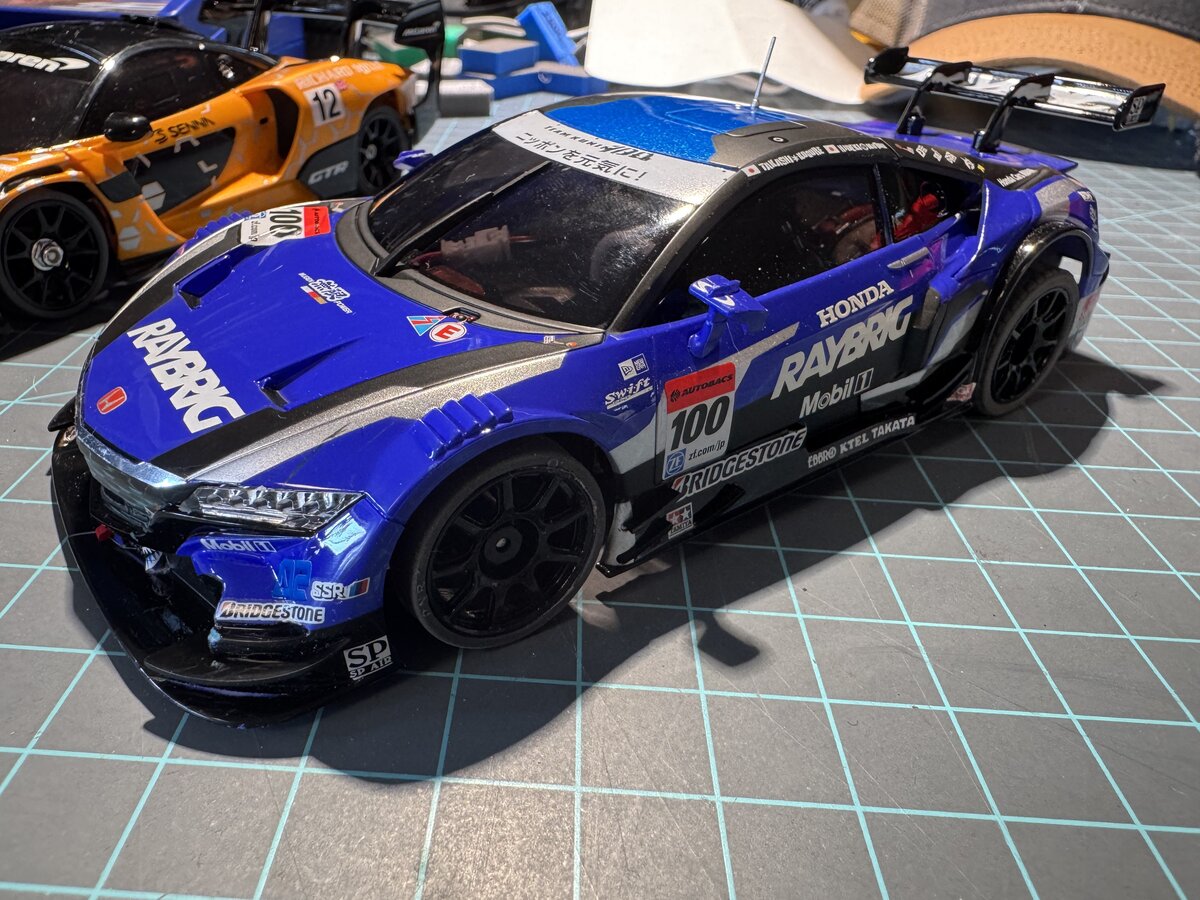
You have decided you want a Mini-Z. You open a retailer page and instead of one obvious “buy this” button you get a wall of options: ReadySets, Sports, chassis sets, AutoScale bodies, and a soup of letters like EVO2, RM, and RWD. None of it tells a newcomer where to start, and the wrong first purchase either burns money you wanted for upgrades or hands you a car you cannot tune. Here is exactly what to buy, and the things the listing won’t tell you that you also need.
The Three Ways to Buy a Mini-Z
Almost every Mini-Z listing falls into one of three buckets. Knowing which is which is most of the battle.
ReadySet is the complete, ready-to-run package, and it is what I tell nearly everyone to buy first. The box gives you the chassis, a pre-mounted painted AutoScale body, the electronics already installed, and a matching transmitter. You add cells and you drive. Everything in the box was chosen by Kyosho to work together, so nothing fights. This is the EVO-class chassis the racing scene is built around, which means anything you want to upgrade later has a part that fits.
Sports is the budget ready-to-run line. It still arrives complete and it still drives, but the electronics are simpler and the upgrade path is narrower than the EVO ReadySet. It is a reasonable pick for a kid’s first car or pure casual bashing. The honest catch: if you have any intention of tuning the car and turning real laps, you will outgrow a Sports faster than you expect and end up rebuying into a ReadySet anyway. If racing is the goal, skip straight to the ReadySet.
Chassis set is a bare platform: no body, frequently no electronics, and no transmitter. It exists for people who already know precisely which wheelbase, motor mount, and board they want and are building a car to spec. As a first purchase it is a trap, because it leaves you buying every other piece blind. Come back to chassis sets for your second build, not your first.
There is a fourth path that does not show up in a retailer’s category filter: buying a used ReadySet from someone who already quit. The case for the used Mini-Z market covers what to check before you hand over cash, and why it is often the smartest money in the hobby.
Which Chassis: RWD, AWD, or Crawler?
Once you have settled on a ReadySet, the next fork is which platform. You are really choosing a discipline, and the platform follows from it.
You want to race on a smooth club track or pavement-style surface, trade laps, and eventually run a class. That is RWD territory: the MR-03 or the newer MR-04. This is the deepest part of the hobby and the largest parts catalog by a wide margin. The one warning is that a rear-drive 1/27 car snaps loose easily until you add a gyro, so budget for one early. If you are torn between the two chassis, the MR-03 vs MR-04 buyer guide breaks down the cost and handling differences.
You want a car that is easy to drive on slick home floors, hard tile, or low-grip surfaces, or you want to drift. That is the AWD MA-020. Four-wheel drive is far more forgiving of a heavy thumb, which makes it the friendlier living-room car and the natural drift platform. Start with the MA-020 platform guide to see how it differs from the RWD cars.
You want to crawl over rocks and scale terrain rather than race. That is the MX-01, a 1/24-ish 4x4 that is honestly a separate hobby from the racing chassis. If trails are your thing, read the MX-01 crawler guide before you buy anything else.
What All Those Letters Mean
The listings throw codes at you, and most of them do not matter for your first purchase. A quick decode so they stop being intimidating:
- EVO / EVO2 is the high-end chassis generation: the better board, brushless-ready, the racing standard. When you see “EVO2 ReadySet,” that is the good stuff.
- RWD / AWD is rear-wheel drive versus all-wheel drive, the choice you just made above.
- RM, LM, wheelbase letters (M, L, LL) describe motor mount position and chassis length, which are matched to a specific body. These genuinely matter when you start swapping shells, but a ReadySet ships with a sane combination already set for the body in the box, so you do not need to solve this on day one. When you do get there, the body compatibility guide is the reference. The point of a ReadySet is that Kyosho already made these calls for you, so do not let the codes stall you.
What Else You Actually Need to Run It
This is the part the listing is quiet about: “ready to run” still assumes a couple of things you have to supply.
You get the car home, drop in a four-pack of alkalines because they were in the drawer, and by the fifth minute the thing is crawling and the steering feels mushy. That is voltage sag, and it is the first newcomer mistake. A Mini-Z runs on four AAA cells, the transmitter takes AAA as well, and alkalines fade hard under load. Buy a set of Panasonic Eneloop NiMH AAA cells and a smart charger up front. They hold voltage far more consistently through a run and you recharge instead of rebuy. The full breakdown of cells and charging is in the battery guide.
The transmitter is handled if you bought a ReadySet, since one is in the box. It is a perfectly good controller to learn on. Down the road a better radio gives you dual-rate, expo, and model memory, but that is an upgrade, not a requirement, so do not let it gate your first purchase. When you are ready, the transmitter guide covers the step up.
The last thing is a tool. Mini-Z hardware is M2 and smaller, and a standard hex driver is too coarse for it. A cheap set with 1.5mm and 2.0mm drivers lets you change tires, swap pinions, and pull the body without stripping screws. That is the one tool you buy on day one; the tools guide lists the rest you will accumulate.
Don’t Spend the Whole Budget on the Box
Here is the spending mistake I see most: a newcomer pours everything into the most expensive ReadySet and has nothing left for the parts that actually change the car. A mid-range EVO ReadySet plus the first round of upgrades will out-handle a top-shelf box left bone stock every single time.
Leave room for the first three upgrades. Bearings free up the drivetrain and belong on every car. The right tires for your surface are the single biggest handling change you can make. A gyro tames the RWD snap that frustrates new drivers. None of these need to be in the cart today, but they should be in the budget. The First 5 Upgrades guide lays out the order and the cost, and the Mini-Z Upgrades guide covers the full sequence from bearings through brushless conversion so you know what the whole path looks like before you spend a dollar.
What to Buy
Your first purchase is really three things: the car, a way to keep it powered, and one tool.
The car. Buy a ReadySet in the platform that matches your discipline. The bundles rotate constantly and marketplace listings for whole cars are a third-party mess, so buy from a source that lists the current version, like Kyosho’s own store at Kyosho America or a dedicated Mini-Z shop. Still choosing between the RWD chassis? The MR-03 vs MR-04 buyer guide settles it. For AWD see the MA-020 platform guide; for crawling, the MX-01 crawler guide.
The power. This is where your cart matters, because cells and a charger are stable, stocked products you will reuse for years:
- NiMH AAA cells: the standard rechargeable cell and what most club racers run. Buy two sets so one is charging while the other runs. → Panasonic Eneloop AAA on Amazon If you want more runtime per dollar, a higher-capacity pack like the EBL 1100mAh AAA set on Amazon does the same job for less.
- Smart charger: individual-cell charging so one weak cell does not quietly drag the whole pack down. → La Crosse BC-700 NiMH charger on Amazon
The tool. A set of M2 hex drivers lets you change tires, swap pinions, and pull the body without rounding out screws. The hex sets actually worth owning mostly come from Mini-Z specialists rather than the big marketplaces, so the Tools Guide has the current picks and flags the one driver size most kits leave out. Or browse the Shop Tool Kits page directly.
My Pick If You’re Starting Today
If you want to race, buy a current MR-03 EVO ReadySet, a set of Eneloop AAA cells with a smart charger, and a cheap hex driver set, and hold the rest of your budget for bearings, surface-correct tires, and a gyro. If you mostly want to drive around the house or learn to drift without fighting the car, make that an MA-020 AWD ReadySet instead and the rest stays the same. Either way you are running the afternoon you open the box, with budget left to make the car genuinely good. From here, the First 5 Upgrades guide is your next stop, and the Mini-Z Upgrades guide maps the full multi-tier path so you know where the upgrade journey leads. Browse the rest of the beginner guides once you’ve got the car sorted.
If you want the whole progression mapped out ahead of time instead of discovering it guide by guide, Box Stock to Podium lays out all five stages from tonight’s unboxing through competitive modified class in one place.
And once the car is charged and the tools are in the bag, here’s what to actually expect your first race night: the format, the pit etiquette, and the one thing beginners consistently get wrong before they’ve turned a competitive lap.