The Best Mini-Z Tires for Carpet That Isn't RCP
Which Mini-Z tire compounds and widths actually work on foam tiles, commercial loop-pile, and DIY club carpet. Not just RCP.
MR-03 · MA-020
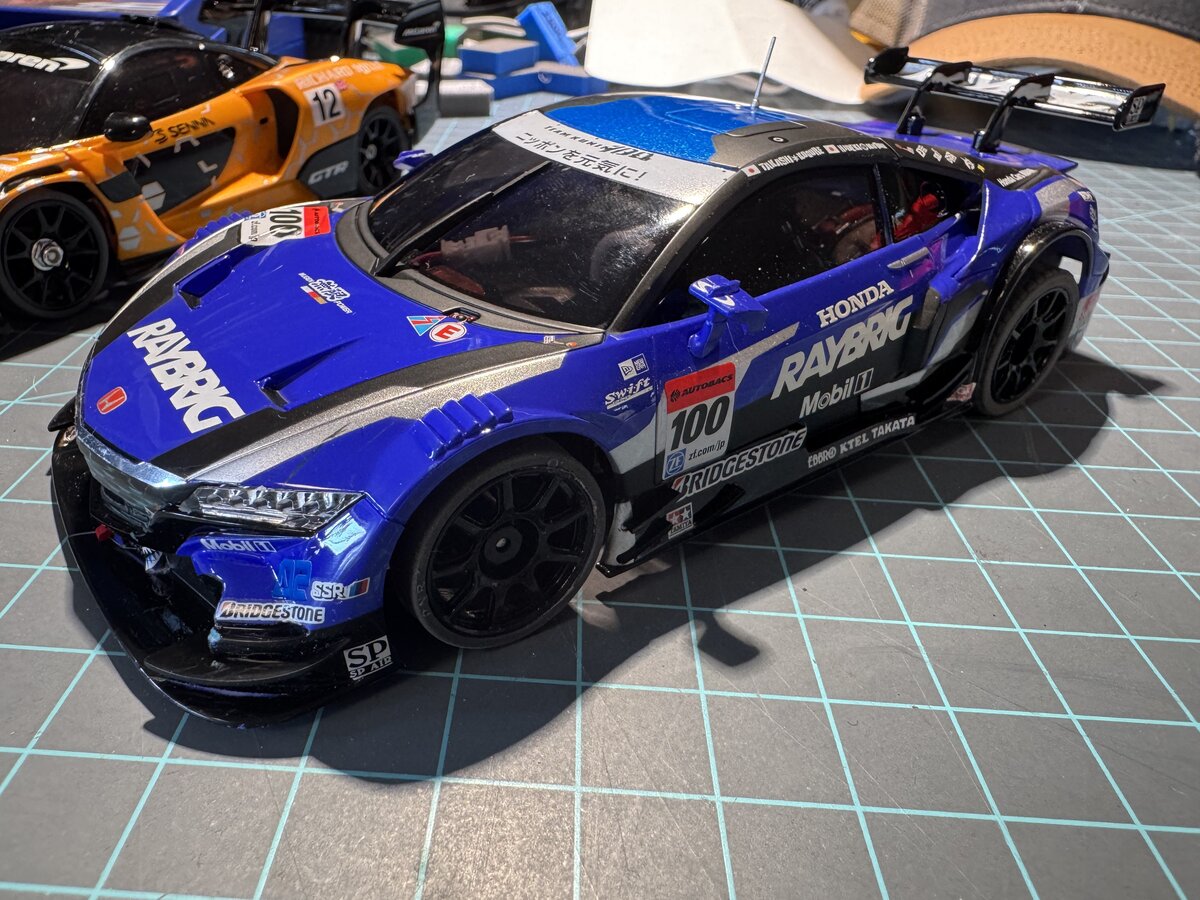
Most Mini-Z tire advice is written for RCP. RCP foam tiles are the de facto standard for serious club racing, and most of the compound guidance you’ll find online, from manufacturer spec sheets to forum sticky posts, assumes you’re running on that surface. The problem is that a lot of clubs aren’t. Foam puzzle tiles from a hardware store, commercial loop-pile carpet, indoor-outdoor carpet stapled over plywood: these surfaces are everywhere, they all behave differently from RCP, and tires that are fast on RCP will either push, slide, or traction roll on them.
This guide is for those tracks. For a full surface-by-surface framework, see the Mini-Z Tire Guide. For RCP-specific recommendations, the Best Tires for RCP guide already covers that ground.
Why Non-RCP Surfaces Change Everything
RCP foam has a specific grip characteristic: high mechanical bite at low speed, consistent across its surface, and it warms up predictably. It’s almost universal in its behavior, which is why one tire spec (Radial Wide 20° rear, Low Height Slick 30° front) works as a starting point almost everywhere RCP is used.
Non-RCP surfaces are not consistent with each other. Each one has different grip levels, texture, and sensitivity to tire compound hardness. Running an RCP-tuned setup on loop-pile carpet usually means massive understeer because the carpet grips harder than the tires are designed for. On foam puzzle tiles, you can end up with the opposite problem. Too much slide because the tiles don’t have the textile texture that generates lateral bite at the tire edge.
The four surface types you’re most likely to encounter:
Foam puzzle tiles (non-RCP): EVA foam from hardware stores. Softer than RCP, lower overall grip, and the tiles compress under the car. Tires need a softer compound than you’d expect.
Commercial loop-pile carpet: Office carpet in community halls and clubrooms. High-grip surface. The looped textile grabs tires hard, and traction rolling is a real concern with soft front compounds.
Indoor-outdoor carpet: Short-cut velour surface. Moderate grip, more forgiving than loop-pile and more predictable than foam tiles.
DIY plywood-plus-carpet builds: Depends entirely on the carpet type. Treat it like whatever carpet is on top.
Compound Selection by Surface
For compound background, the Tire Guide covers the full Kyosho compound range. Short version: 10° is very soft (maximum grip), 20° is soft, 30° is medium, 40° is hard. Lower number = more grip. The surface types below affect whether that hierarchy holds.
Foam Puzzle Tiles (non-RCP)
Rear: Start with Kyosho Radial Wide 20°. If the car is still sliding on acceleration with 20°, try the Kyosho Radial Wide 10°. This sounds counterintuitive if you’re used to RCP where 20° is already very soft. On foam tiles, the lower grip ceiling means you actually need more tire compliance to generate mechanical grip.
Front: Kyosho Low Height Slick 30°. Traction rolling is less common on foam tiles than on high-grip carpet, so you have room to run a softer front compound than you would on loop-pile. If the front is still washing out, try narrowing the front tire before going to a harder compound. Width change gives you more tuning granularity here.
PN Racing and Ride compounds in the equivalent softness range work on this surface too. PN Racing 20° equivalents tend to run slightly grippier than Kyosho 20° in practical use; if you’re already on Kyosho 10° and want more, that’s the next step.
Commercial Loop-Pile Carpet
This is where RCP advice breaks down fastest. Loop-pile carpet has more grip than RCP, not less, and if you walk onto it with 20° rears and 30° fronts you’re likely to either traction roll constantly or find the car handling like it’s on rails but nervous.
Rear: Kyosho Radial Wide 30°. On high-grip loop-pile, the 30° compound gives the rear enough slip to be controllable. 20° on this surface can make the rear feel unpredictably locked. Power on and the car hooks so hard it unsettles. Some drivers on very high-grip carpet go as far as 40° rear. Test with 30° first.
Front: Kyosho Low Height Slick 40°. On loop-pile, traction rolling is a genuine hazard with soft front tires. The 40° compound reduces front bite enough to keep the car planted. Running 30° fronts on high-grip loop-pile often means the front grabs mid-corner and flips the car. The Low Height profile helps too. Taller sidewall tires amplify the problem.
For MA-020 on loop-pile, see the AWD section below. AWD changes this calculus significantly.
Indoor-Outdoor Carpet
More forgiving surface. Start with the RCP baseline (Radial Wide 20° rear, Low Height Slick 30° front) and adjust from there. Most drivers on indoor-outdoor carpet find the RCP baseline works or is one step off. If the car oversteers, go to 30° rear. If it traction rolls, switch to 40° front. This surface rewards incremental tuning rather than a full departure from standard specs.
Width Considerations
Width interacts with surface differently on carpet vs RCP. On RCP, wider rear contact patch almost always means more rear grip. On carpet, this relationship is less linear.
On loop-pile carpet, running very wide rears can cause the car to “dig in” mid-corner. The tire edge catches the carpet pile and creates a snap oversteer that’s hard to catch. A narrower rear tire on this surface sometimes gives more predictable grip because the contact patch doesn’t hook into the texture as aggressively.
On foam tiles, wide rears are still generally faster. The surface is smooth enough that edge effects matter less, and you want every bit of contact patch you can get.
Front width affects traction rolling on any high-grip surface. Narrowing the front reduces the lever arm that causes the car to tip. If you’re fighting traction rolling on loop-pile, narrow fronts are worth trying before you commit to a harder compound. The Wheel Offset and Width Guide covers this in more detail.
RWD vs AWD on Non-RCP Carpet
MR-03 (RWD) and MA-020 (AWD) behave very differently on non-RCP carpet surfaces, and they need different compound splits.
MR-03 on loop-pile: Rear goes harder (30° or 40°) to manage the high grip. Front can stay at 30° unless you’re traction rolling. The rear is always the priority. If it hooks up too hard on power, the car snaps.
MA-020 on loop-pile: AWD is less likely to snap oversteer but more prone to consistent understeer with too-hard compounds. The MA-020 often works best with matched compounds (30° all around) rather than the front/rear split a RWD needs. See the MA-020 Platform Guide for more.
MR-03 on foam tiles: Go soft (20° or softer) at the rear, 30° front. The car will slide more than on RCP. Fix the rear first before touching fronts.
MA-020 on foam tiles: Try 20° all around. Four-wheel drive masks some of the surface’s lower grip, but you still need softer compounds than RCP.
What to Buy
These are the specific compounds worth keeping in your tire bag for non-RCP surfaces. The right combination depends on your surface type. Use the compound sections above to match.
Kyosho Radial Wide 20°: soft rear baseline for foam tiles and moderate carpet Kyosho Radial Wide 20° on Amazon
Kyosho Radial Wide 30°: rear tire for loop-pile and high-grip carpet Kyosho Radial Wide 30° on Amazon
Kyosho Low Height Slick 30°: front baseline for foam tiles and indoor-outdoor carpet Kyosho Low Height Slick 30° on Amazon
Kyosho Low Height Slick 40°: front tire for loop-pile carpet, anti-traction-roll Kyosho Low Height Slick 40° on Amazon
PN Racing Mini-Z Tires: alternative soft compounds for foam tile surfaces PN Racing Mini-Z Tires on Amazon
Kyosho Tire Tape: required for rear tire security on any surface Kyosho Mini-Z Tire Tape on Amazon
Starting Points by Surface (Quick Reference)
| Surface | MR-03 Rear | MR-03 Front | MA-020 All |
|---|---|---|---|
| Foam puzzle tiles | Radial Wide 20° | LH Slick 30° | Radial Wide 20° |
| Loop-pile carpet | Radial Wide 30° | LH Slick 40° | Radial Wide 30° |
| Indoor-outdoor carpet | Radial Wide 20° | LH Slick 30° | Radial Wide 20-30° |
| DIY carpet build | Match carpet type | Match carpet type | Match carpet type |
These are starting points. Grip varies within each surface category depending on carpet age, temperature, and tire cleanliness. The table gets you to the ballpark; track time gets you the rest.
When you do start testing compounds against each other, judge them across the full life of a run rather than on a fast early lap. The compound that is quickest on lap two is often not the one that survives a five minute final, and how to test a setup change covers how to run that comparison without letting track rubber-in and pack state decide it for you. Whatever you land on, true and glue the tires first. An out-of-round pair reads as a compound problem on carpet more convincingly than it does on RCP, and no amount of compound swapping will fix it.
If you’re also racing on RCP, the Best Tires for RCP guide covers that separately. Keep both setups in your pit bag. For the full curated compound and width lineup, see the Shop Tires page.
Prices are approximate and change often. Check the listing for current pricing.
What I run up front. Slicks give a cleaner bite off the carpet than the stock radials once tire prep is dialed in. PN Racing lists every compound and width by SKU on its own page; Kenon Hobby is their worldwide distributor.
Shop →What I run out back. Radials give forgiving rotation without breaking loose under power. PN Racing lists every compound and width by SKU on its own page; Kenon Hobby is their worldwide distributor.
Shop →Medium compound, unidirectional tread. Good all-around for RCP and carpet.
Shop →Soft compound for high-grip RCP tracks. More rotation mid-corner, wears faster.
Shop →Precision molded, consistent compound across the batch. Track-ready.
Shop →