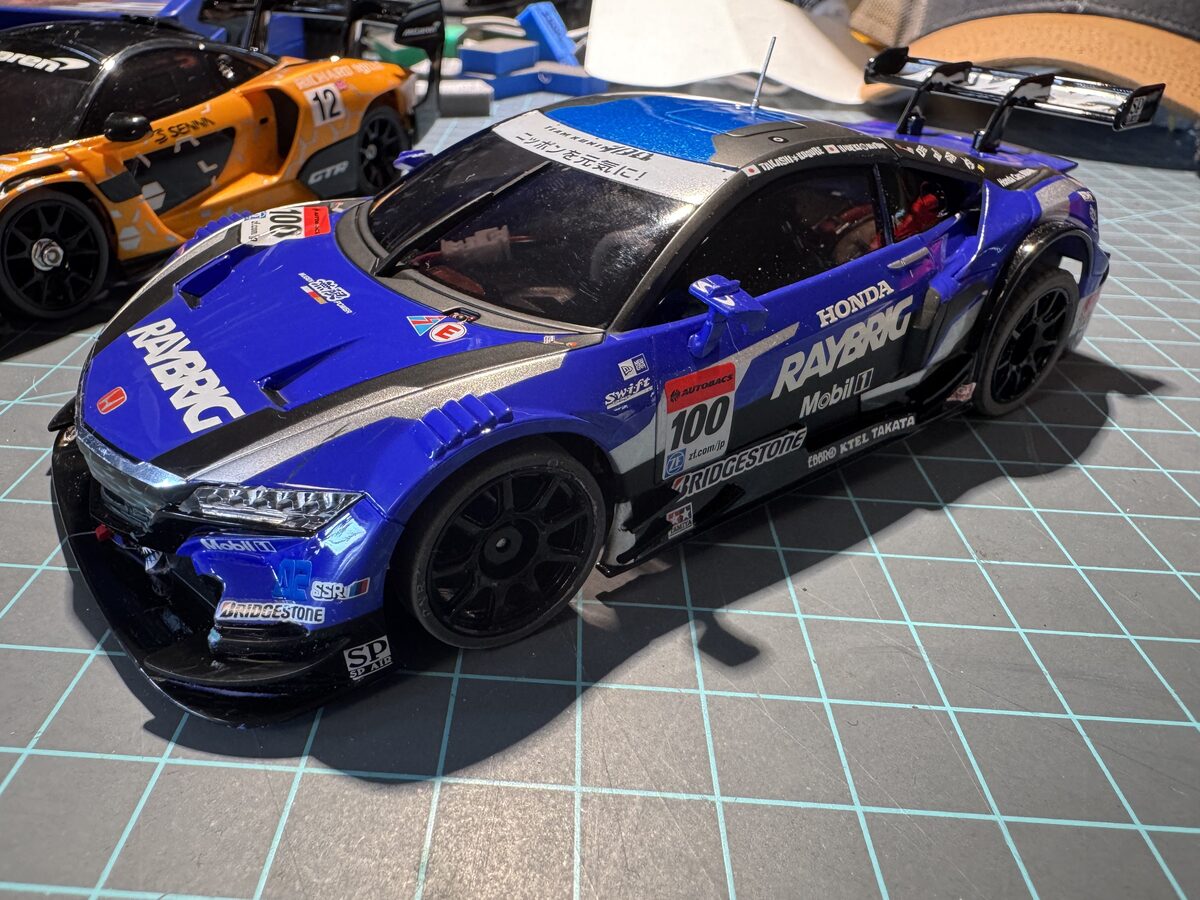
I write a lot about Mini-Z chassis setup, upgrade paths, and race prep. It’s fair to ask what I’m actually running. Here’s the answer.
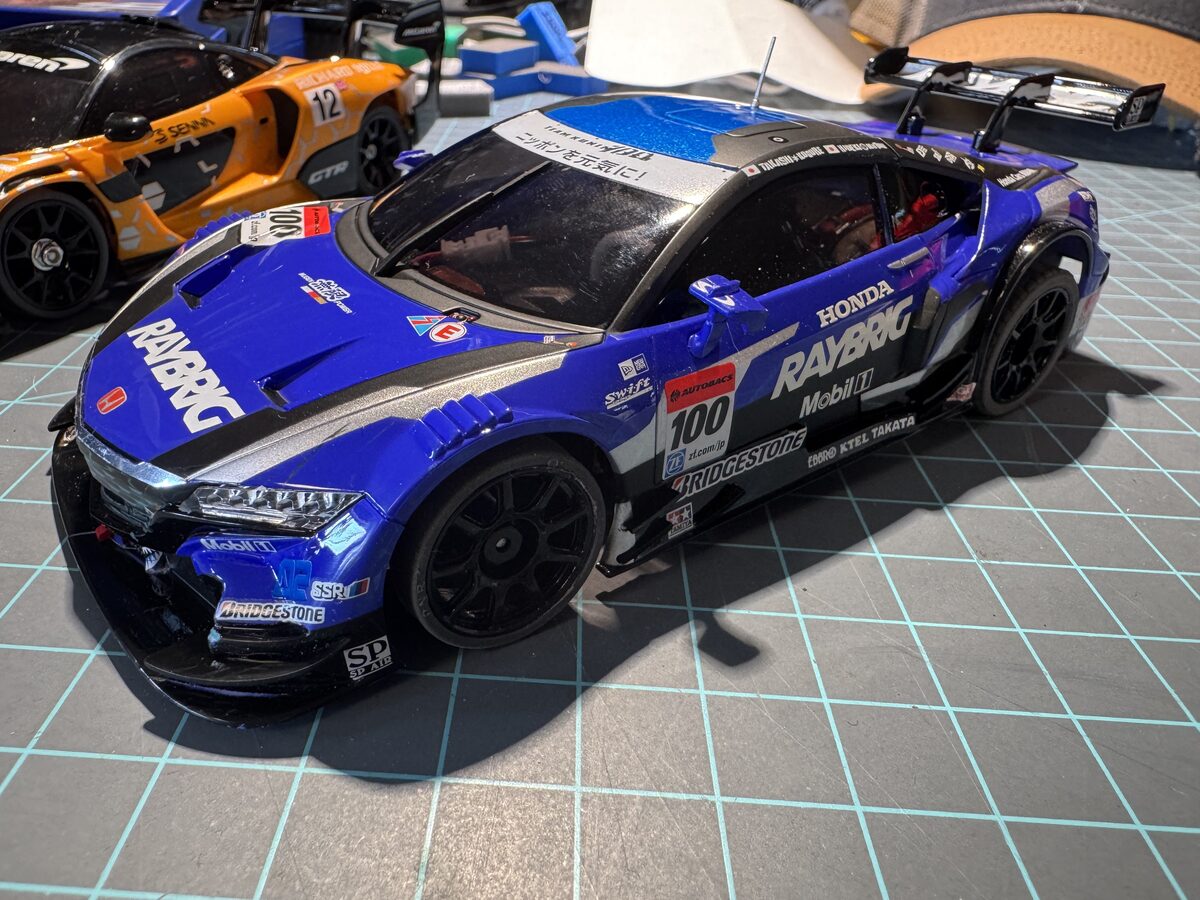
The Raybrig NSX: Primary Track Car
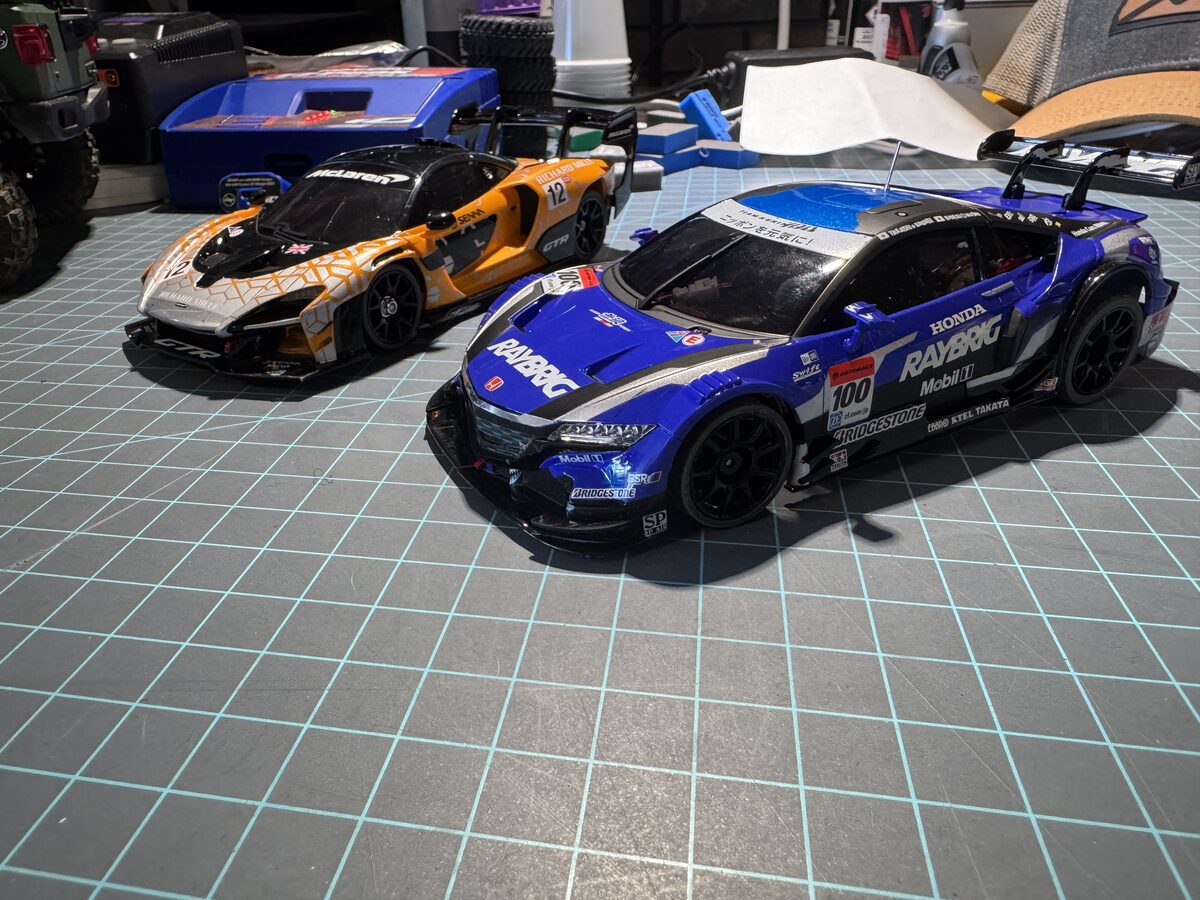
My main car is an MR-03 RWD ReadySet in the Raybrig Honda NSX-GT livery. Blue, #100, Super GT series paint. It’s the one that sees the most seat time. Club nights, practice sessions, the occasional parking lot shakedown when I want to test a setup change before I commit to it at the track.
I like the NSX body for a few reasons beyond the look. The Super GT proportions work well on the MR-03 chassis without fighting the aero balance the way some of the wider bodies can. It also photographs well, which matters more than I’d like to admit when you’re writing about this stuff.
The car is stock out of the ReadySet right now, and that’s deliberate. Every setup guide I write, including the ones on this site, assumes you know what stock actually feels like before you start layering parts on top of it. If your first move out of the box is a new T-plate and a tire swap in the same session, you’ve got no way to tell which change did what. The NSX is my control. Bone stock, logged laps, and a reference point for every part I test on the other car.
The McLaren Senna GT3: Second Car, Different Job
The second car is an MR-03 RWD ReadySet in the McLaren Senna GT3 livery. Orange, #12, Richard Mille branding. It came home a few months after the NSX.
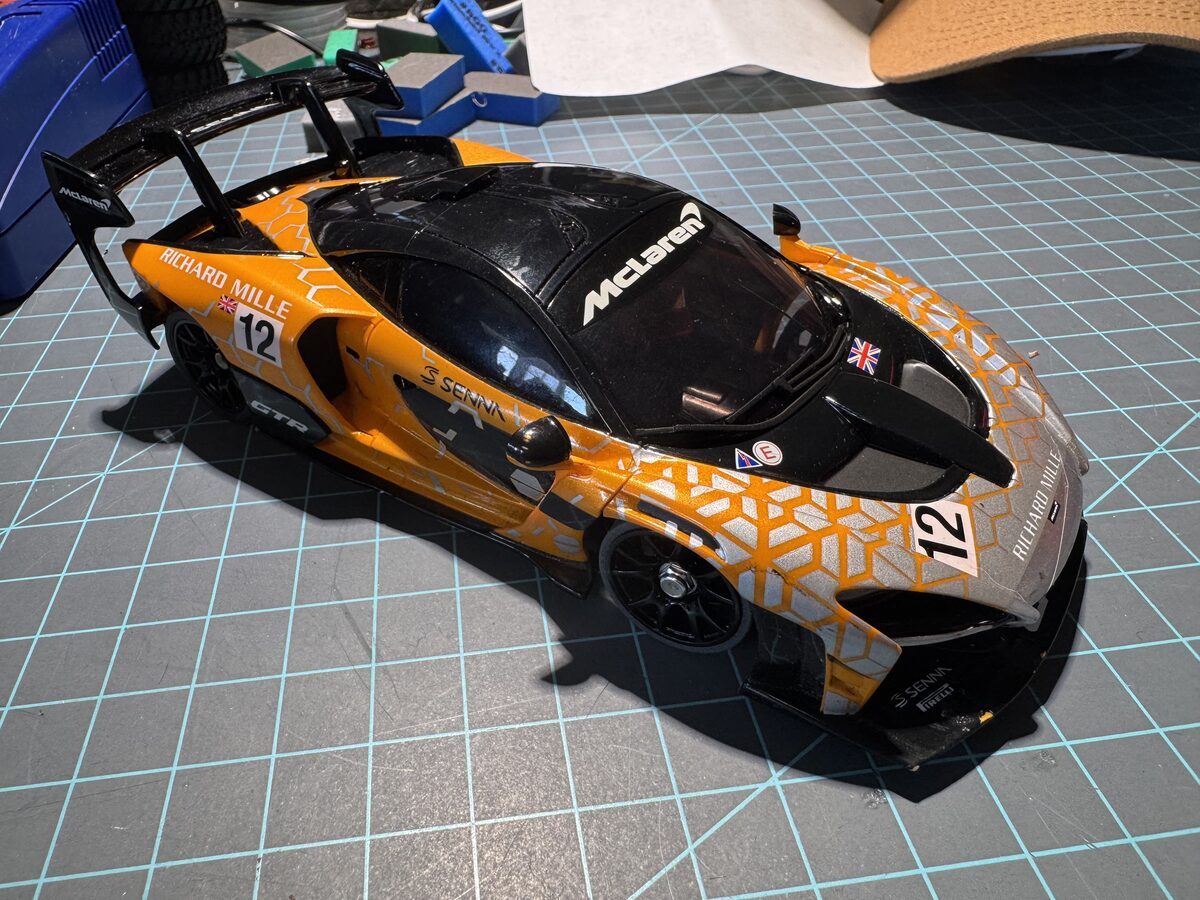
I’ve told other people they don’t need a second car, and I stand by that advice for most drivers stuck on a plateau. A second chassis at the three-month mark is usually a way to avoid the boring work of getting good at the one you have. My situation is different for one reason: the McLaren isn’t a distraction from getting better at the NSX, it’s what I break instead of the NSX.
Having two cars at a club night means you can swap when something goes wrong mid-session instead of spending your race time on a table with a screwdriver. Broken motor connector, dead gyro, tire that’s given up. Pull the backup car, keep racing. Sort the other one out after.
The McLaren is also where I try things first. New T-plate, different tire compound, gyro setting I haven’t run before. That goes on the orange car before it touches the blue one, because I’d rather find out a change is bad on the backup than on the car I actually need working in twenty minutes.
Both Cars, One Pit Box
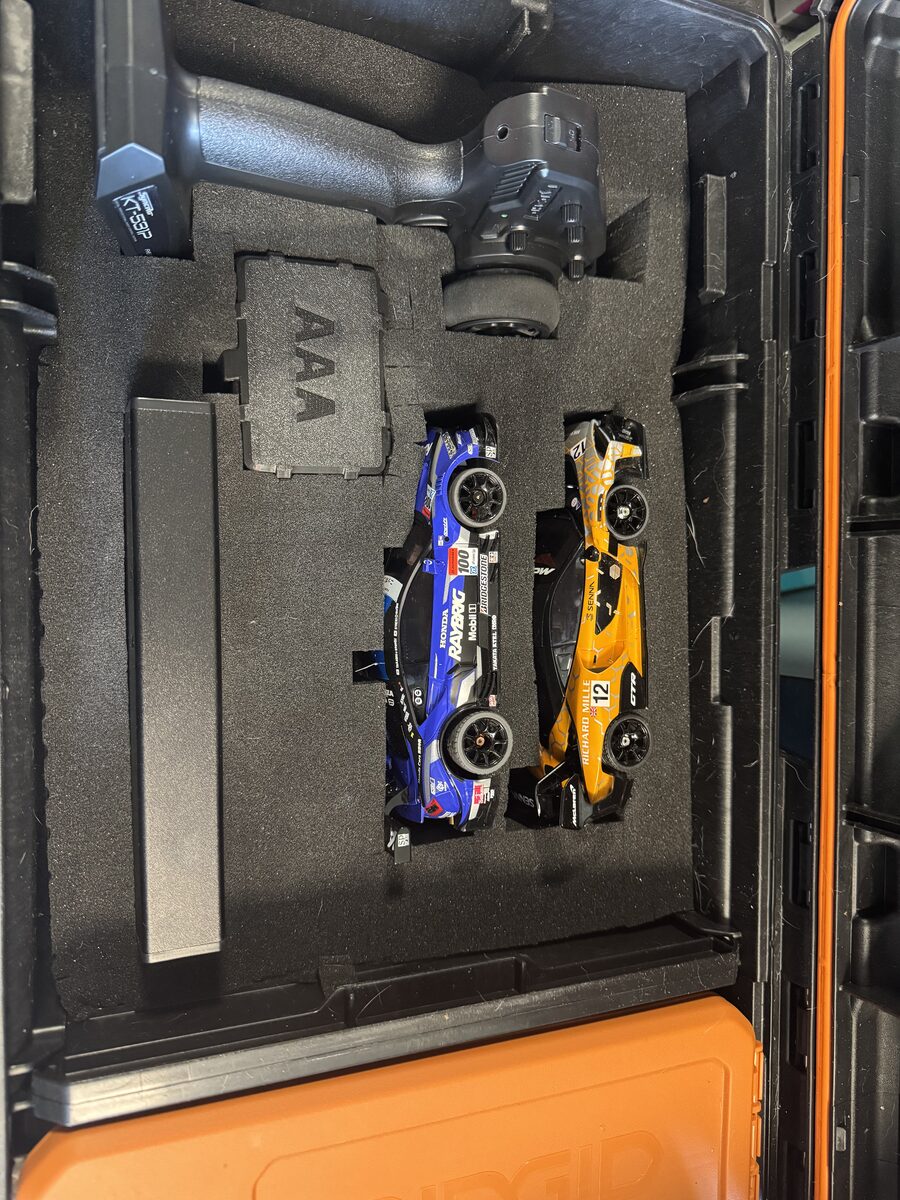
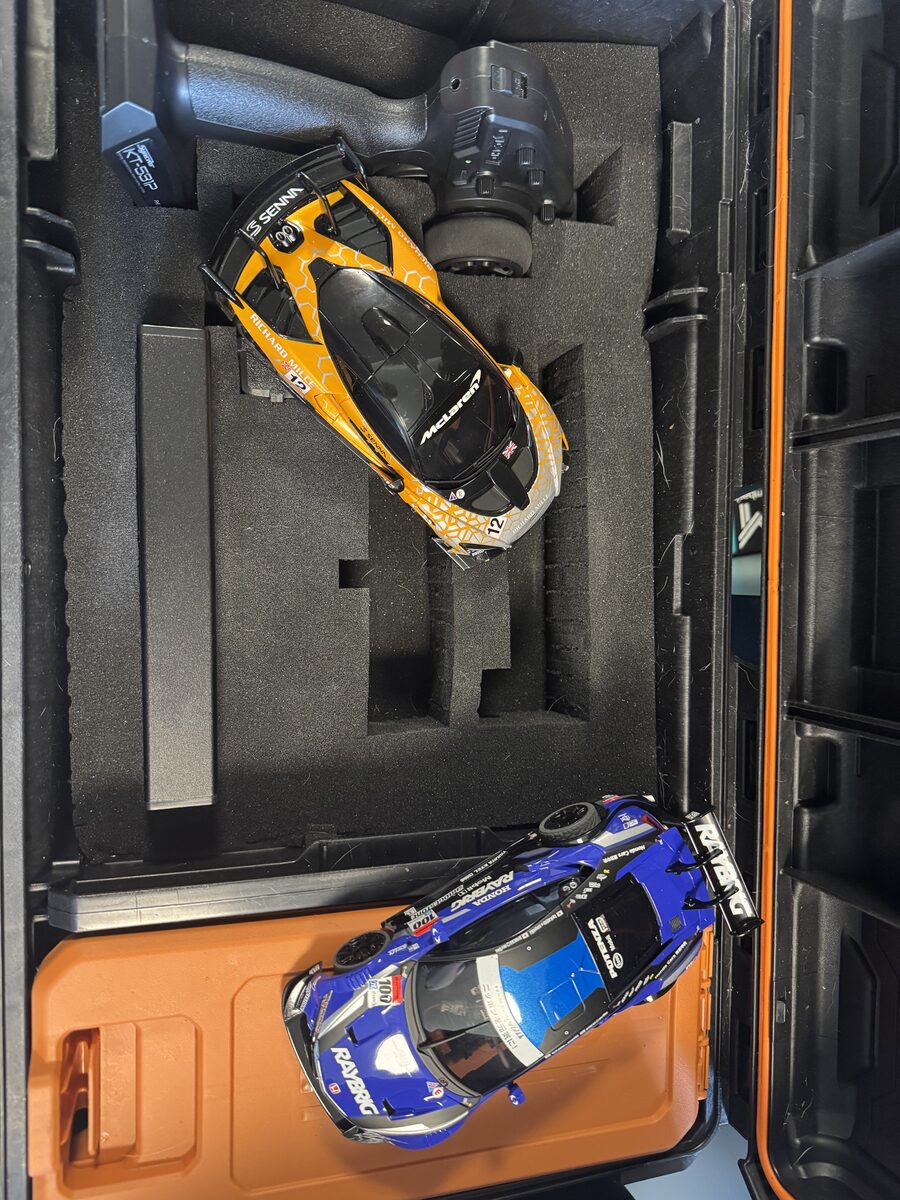
Both cars travel in the same pit box, cut in foam. The KT-531P transmitter sits between them. Everything fits, nothing rattles, and I can carry the whole setup in one hand into a venue that usually doesn’t have much table space to spare.
The KT-531P is the stock transmitter that ships with the MR-03 ReadySets, and I haven’t replaced it. It works. The ergonomics are reasonable for a 2.4GHz stick radio at this price point, and it’s one less thing to relearn when I’m already juggling two chassis. If I end up racing more seriously I’ll look at the Sanwa options, but for club night the KT-531P is doing the job. One radio, two cars, one set of bind procedures to remember. That’s worth more to me at 8pm on a Tuesday than a marginal ergonomics upgrade.
Why This Setup, Not a Bigger Garage
I could run more cars. Plenty of racers at my club do, one chassis per class or per mood. I’ve stuck with two for the same reason I ran the NSX stock as long as I did: fewer variables, more laps, faster feedback on whether a change actually worked. Two identical RWD ReadySets means every lesson I learn on one transfers directly to the other. Add a third platform and I’d be splitting attention across setups I can’t fully compare against anything.
If you’re deciding how to build your own pit bag, the short version is this: pick a primary car, keep it as close to a known baseline as you can stand, and if you add a second chassis, give it an actual job instead of just having it. Mine hauls the risk so the NSX doesn’t have to.
Mini-Z Modder