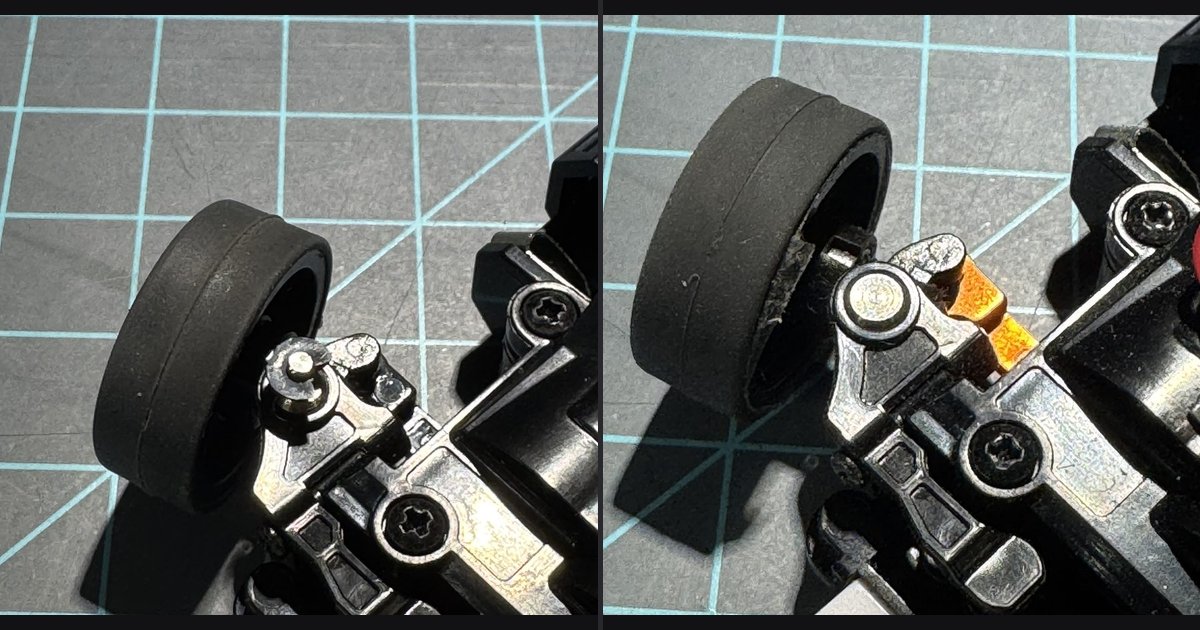
Tonight’s a track night. If you haven’t flipped your king pins yet, that’s the one thing I’d do before you load the car.
Not tire prep. Not gyro tuning. The king pin flip.
This article contains affiliate links. If you buy through them, MiniZMods earns a small commission at no cost to you.
This is not a close call. It is not “it depends on your surface” or “some people prefer stock.” Every credible Mini-Z tuning source treats this the same way, from RCTech megathread veterans to mini-z-guide.com to the people actually running fast at club night: table-stakes, pre-track, do it once and forget it. The only reason to still be running stock king pin orientation is that no one told you to flip it yet.
Now someone is.
What’s Actually Wrong With Stock
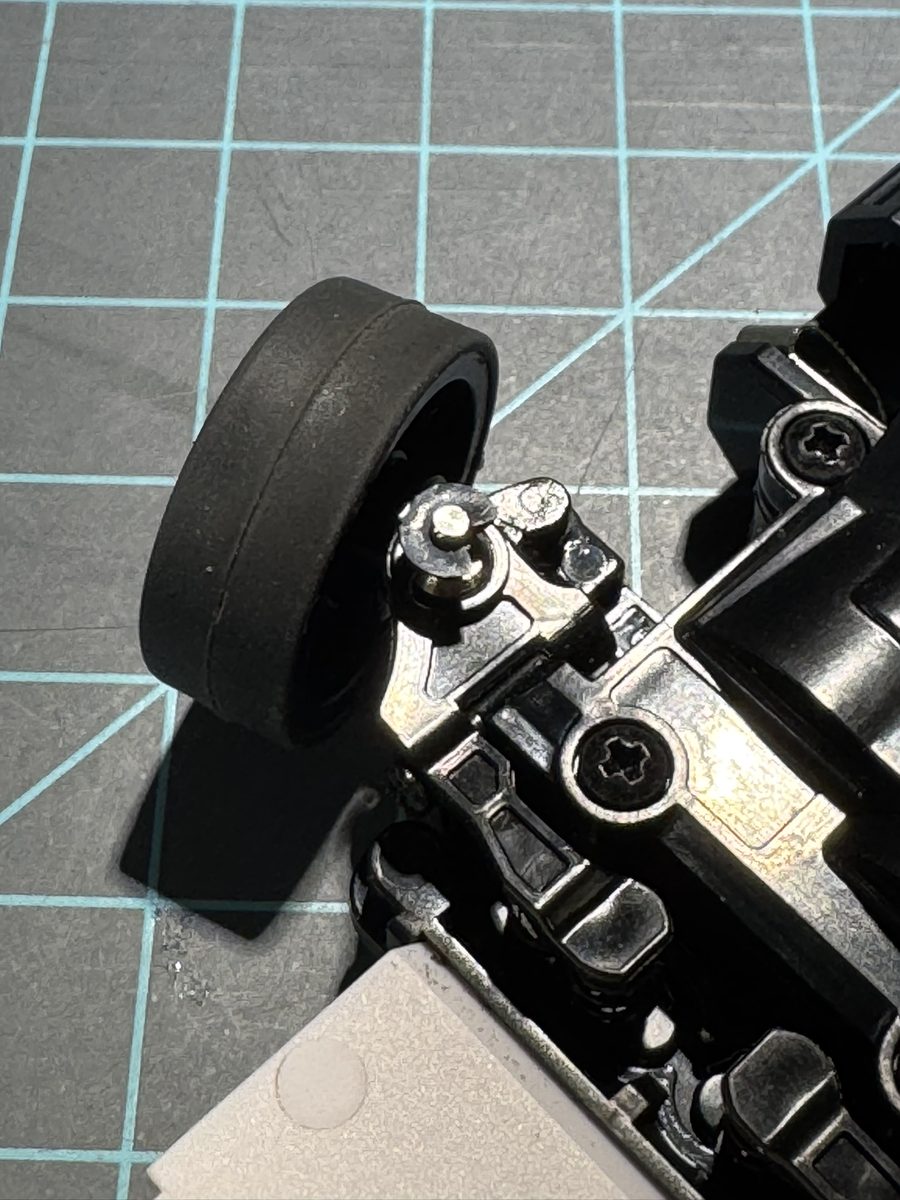
The MR-03 front suspension is a vertical king pin threaded through the lower arm, up through the steering knuckle, with a spring captured at the top. In factory orientation, the pin’s clip sits at the top and the shaft descends through the knuckle bore. The knuckle slides up and down that pin shaft as the suspension compresses.
The problem is the pin itself. Stock king pins are black-oxide-coated steel. That coating is abrasive, and multiple RCTech regulars describe it as “like sandpaper” on the knuckle bore. So your suspension doesn’t compress and rebound freely; it drags. It steps. Instead of reading the surface, the front end binds and releases in little hitches.
On smooth RCP tile it shows up as vague initial steering. You turn in and there’s a moment of nothing before the front catches. On carpet, where the front end is loaded harder, it costs you more: the suspension can’t keep up with what the surface is doing, and the car feels on/off where it should feel progressive.
There’s a secondary problem too. Because the knuckle bore is sliding on the pin shaft under load, that bore wears oval over a season. The front end loosens progressively and you never quite know what you’re tuning.
What the Flip Does (And What It Doesn’t)
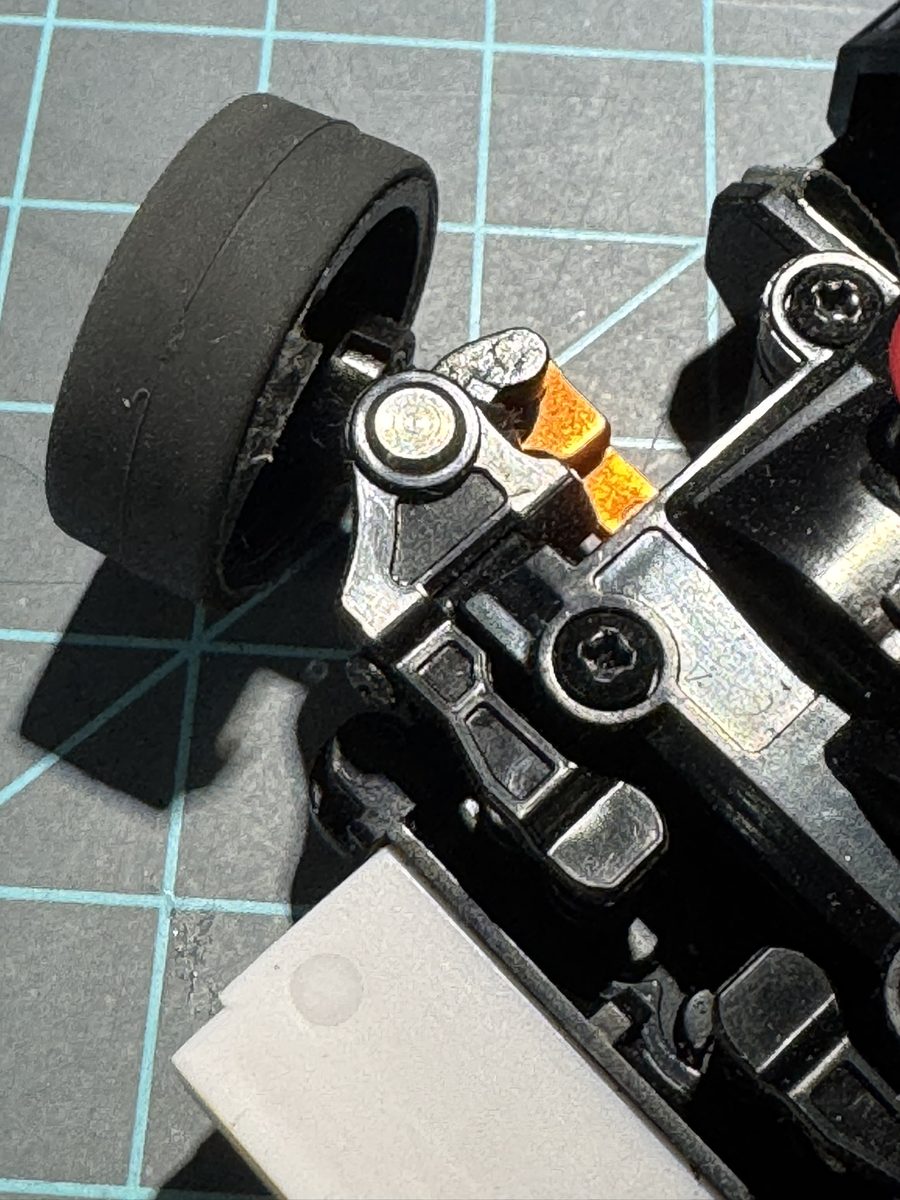
You invert the pin. Ball end up at the knuckle, shaft now captured by the lower arm instead of running through the knuckle bore. The knuckle pivots on the ball rather than sliding on the shaft.
One important point, because this gets wrong online all the time: the flip is a stiction fix, not a geometry change. The pin axis is the same line in space after you invert it. Caster angle is unchanged. Camber is unchanged. Scrub radius is unchanged. Bump steer is unchanged. If someone tells you the flip alters your caster, they’re confusing it with a different mod. What changes is friction, specifically how much of it there is between the pin and the knuckle during suspension travel.
The king pin flip is also not the same thing as the “long king pin” setup you’ll see referenced in older threads. That’s a different mod, a longer-than-stock pin to alter the spring capture length. Separate discussion, mostly superseded. Don’t conflate them.
What you’ll feel after the flip: smoother front end, cleaner turn-in, less deadband between “I steered” and “the car turned.” The suspension actually sees your inputs instead of absorbing them in stiction. On-power corner exit also improves marginally because the inside front unloads cleanly instead of hanging up.
This applies to every MR-03 variant, V1 through EVO2. The front-end architecture is identical across all of them. If you have an MR-03, the flip applies.
One footnote on the MR-04: Kyosho redesigned the entire front end on the MR-04 EVO2 specifically to eliminate the sliding-knuckle geometry, citing “optimized clearance with the kingpin ball for smoother operation.” That’s a manufacturer tacitly acknowledging the MR-03’s friction problem and engineering it out. It’s the strongest possible evidence that this mod is fixing a real factory shortcoming.
How to Do It
You need flush cutters and about five minutes of bench time.
Flush cutters: don’t skip these or use whatever’s handy in the junk drawer. You need a clean cut, not a crushed one. The Xuron 170-II is what most people use and it’s worth having in the kit for this and a dozen other Mini-Z jobs.
Steps:
- Pull the front suspension. Remove the king pin from each knuckle. It’s held by a clip at the top in stock orientation.
- Note the shim stack. Shims travel with the pin; maintain their order relative to the knuckle.
- Invert the pin. Ball end now goes up into the knuckle; the shaft captures into the lower arm.
- The pin will protrude below the lower arm. Snip the exposed tail flush with the clip groove using the flush cutters. This step is not optional. The tail will drag on the track if you leave it.
- Reassemble with shims in the same order.
After you’re done, work the suspension by hand. It should feel noticeably freer than before. If there’s still some drag, a small amount of hobby metal polish worked through the joint will free it up. Mothers Mag and Aluminum Polish is what gets recommended most often in the threads. A tiny amount on a cotton swab, work it through the ball joint, wipe clean. The improvement is immediate.
Re-check your front ride height after reassembly. The change is small but worth confirming you’re where you set up to be.
Where You’ll Feel It Most
The flip helps on every surface. The magnitude scales with how hard the surface asks of the front suspension.
On carpet the improvement is largest. High-grip carpet loads the front hard at turn-in, which means stiction costs you more. If you’re at a club running carpet mains and you’re still on stock king pins, you’re leaving more lap time on the table than anywhere else.
On RCP tile you’ll notice cleaner initial steering and more consistent corner entry. The car turns in the same way every lap instead of occasionally sticking through the first bit of travel.
On rough or outdoor surfaces, the suspension needs to actually work over bumps. Stiction is the enemy. Flip it.
Box Stock class is worth calling out specifically. The flip is explicitly legal everywhere I’ve seen (you’re not replacing the pin, just reorienting it), and it’s one of the few free mods that produces a measurable result in a rules-constrained class. Box Stock on carpet is the single scenario where this mod has the most obvious impact. If that’s what you’re racing, there’s no reason to wait.
What About “I Win on Stock”
The people at the top of results are not running stock king pins in stock orientation. They’re either flipped, or they’re past flipped, running PN Racing Delrin-ball king pin sets (MR3055) or full A-arm fronts that moot the question because there’s no sliding knuckle bore to begin with. Nobody at the sharp end is defending factory orientation. That’s the tell.
The “I run stock and do fine” argument comes almost entirely from people running on living-room carpet with a 20T motor. Not a data point.
If You Want to Go Further
The flip is free and permanent. If you want to spend money, the next move is the PN Racing MR3055 Delrin Ball King Pin Set. It replaces the metal king pin entirely with Delrin ball pivots, eliminating sliding friction by design rather than just reducing it. Strong product, commonly referenced in fast setup sheets. It typically lives on RCMart or KenOnHobby rather than Amazon. Search “PN MR3055” on either site. Not worth linking a dead URL here.
Beyond that is the full A-arm conversion conversation, which is a different article.
I’ve been running the MR-03 platform for a while and the king pin flip is one of two mods I’d do on any car before the first track session. The other is the bearing upgrade covered in the MR-03 Platform Guide. The platform guide covers the full suspension setup context; the king pin flip is the first thing in the “front end” section for a reason.
If you haven’t done it: do it tonight. Takes five minutes and costs nothing but the flush cutters you should already own.
Mini-Z Modder